
Cook, Learn, and Share to Fight Hunger.
  • 30 min.
  • 30 min.
  • 1/5

Ingredients:

Potatoes:

Green Beans:

Eggs:

Salad Ingredients:

Optional final touch:

* Fresh or frozen – no defrosting necessary before cooking.
** I prefer the combination of baby spinach, kale, and iceberg lettuce, but you can’t go wrong with any other mix too. Thoroughly clean and rip/chop, or buy a ready-to-go bag of your favorite lettuce.

Recipes

Best served with:

Directions:

1. Potato Preparation:

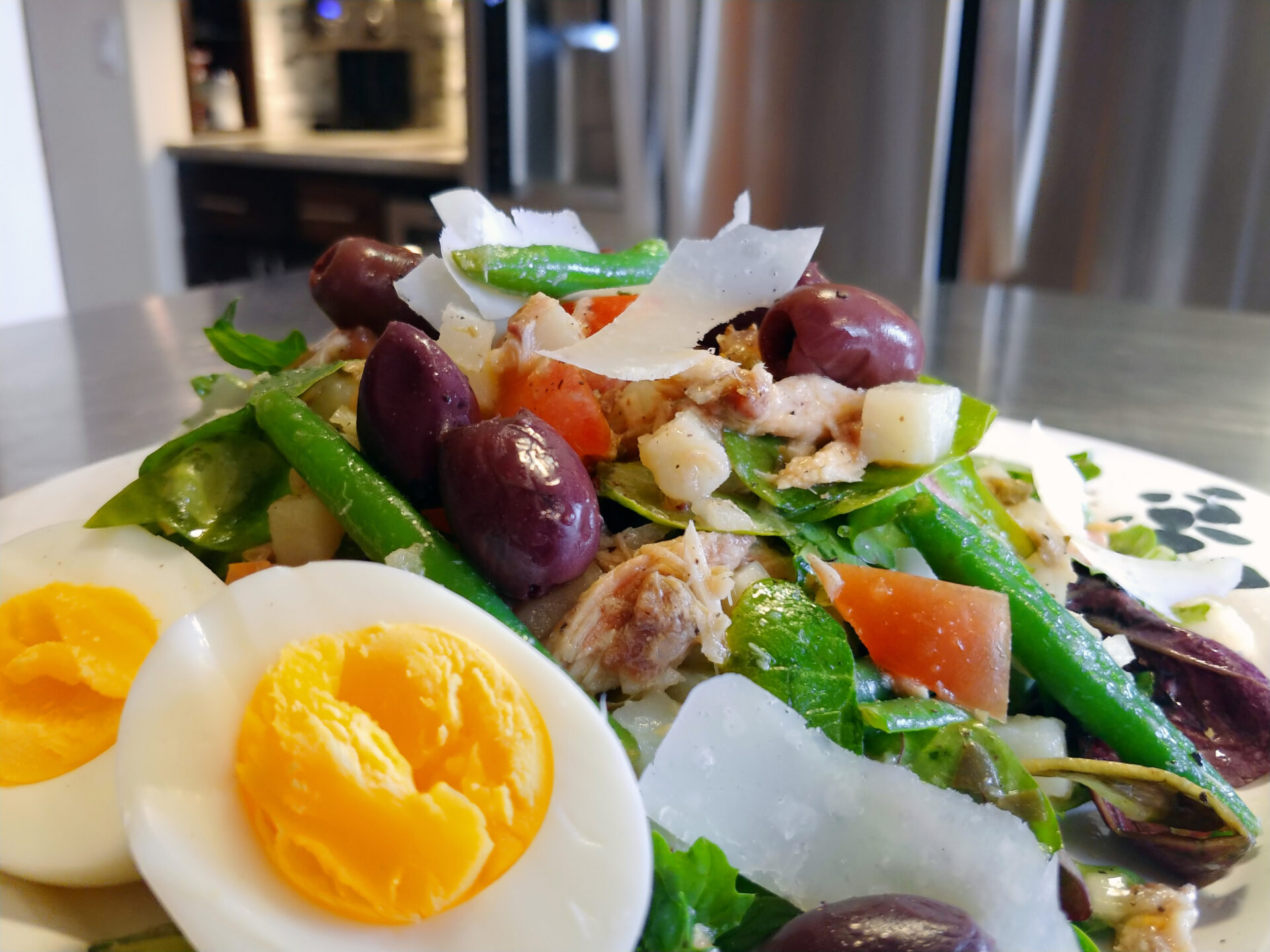
Let’s start the preparation of the Niçoise Salad with Tuna.

1.1.

Rinse the potatoes under cold running water.

1.2.

Peel them if you like or leave the skins on for extra texture and nutrients.

1.3.

Dice into uniform pieces (about ⅜” so they cook evenly).

1.4.

Place the diced potatoes into a medium pot and fill with cold water until it sits about 1″ above them.

1.5.

Cover with a lid, set over high heat, and bring to a boil.

1.6.

Lower the heat to medium and boil until fully tender (about 12 – 15 minutes). Pull one piece out and taste to confirm it’s cooked through.

1.7. Drain through a colander, then spread the potatoes on a baking sheet to cool completely and season with salt and pepper.

Tip: Spreading the potatoes out in a single layer helps them cool quickly and keeps them firm instead of turning mushy.

1.8.

Once cool, transfer the potatoes to a large mixing bowl.

Fruit and vegetables are nutritious, full of vitamins, and are very flavorful. Even if you are not interested in gaining the health benefits or appreciate the initial taste, fruit and vegetables are often very important for creating a final flavor in many meals (creating important flavor elements). The following are ways to wash, peel, and cut your produce. In this section, I’m not able to cover all fruits and vegetables but have chosen the most common ones. In this section I’m not able to cover all fruits and vegetables but have chosen the most common ones.

Tom the Chef Tom the Chef Founder

2. Beans Preparation:

A.

Fresh whole green beans preparation:

1.

Fill a large pot about halfway with water and set it over high heat to bring to a boil.

2.

Meanwhile, thoroughly rinse all the green beans, then cut off both ends.

3.

Add the beans to the boiling water and cook until lightly softened but still a little crisp – do not overcook (about 5 – 7 minutes).

4.

Drain through a colander.

5.

Optional Step: Place the beans into cold water with ice to cool for about 2 to 5 minutes—this will improve the color and also the crunch, which needs to be followed by removing them onto a paper towel to dry.

6.

Place them into the mixing bowl and generously salt and pepper them, followed by a gentle stir.

B.

Frozen green beans preparation:

1.

Fill a large pot about halfway with water and set it over high heat to bring to a boil.

2.

Cook the beans in the boiling water for about 2 minutes (frozen green beans usually come precooked, so they don’t need any longer).

3.

Drain through a colander.

4.

Optional Step: Place the beans into cold water with ice to cool for about 2 to 5 minutes—this will improve the color and also the crunch, which needs to be followed by removing them onto a paper towel to dry.

5.

Place them into the mixing bowl and generously salt and pepper them, followed by a gentle stir.

6.

Optional Upgrade: Instead of placing them in the bowl and seasoning them, place them in a preheated pan with oil, briefly sear them, then season with salt and pepper. This extra step will add some preparation time but will allow the beans’ flavors to develop significantly.

3. Eggs Preparation:

3.1.

Place the eggs into a pot with cold water and set it over medium-high heat.

3.2.

Cook for about 12 – 13 minutes.

3.3.

As soon as they’re done, transfer the eggs straight into ice water (adding ice makes the cooldown even more effective). To save time and dishes, you can leave the eggs in the pot and simply run cold water into it in the sink to replace the hot water.

3.4. Gently crack the shells all over, then let the eggs sit and cool in the cold water for at least 10 minutes – the water works its way under the shells and makes them much easier to peel.

Tip: To keep your kitchen clean, set the shell pieces on a paper towel as you peel, then toss the towel and shells in the trash once all the eggs are peeled.

3.5.

To catch any stray bits of shell, return the peeled eggs to the ice water until all are peeled, then set them on a second paper towel to dry for a minute before using.

3.6.

Then cut into halves and season with salt and pepper.

4. Mix the Salad:

Important: Make sure the potatoes, beans, and eggs have cooled before combining everything –warm ingredients will wilt the greens, and cooling keeps a cold salad food-safe.

4.1. Add the precooked green beans to the large mixing bowl with the cooled potatoes, then add the following:

½ LB of baby tomatoes – cut in half
4 OZ of loose-leaf lettuce mixture
2 OZ of arugula
½ of a shallot – finely chopped
2 cloves of garlic – grated
Juice from 1 lemon
1 cup of tuna – drained
¼ cup of capers – finely chopped
10 fillets of anchovies – finely chopped
4 TBSP of extra virgin olive oil
½ TSP of ground pepper
½ TSP of salt

Gently toss everything together with a silicone spatula until evenly combined, taking care not to bruise the greens.

4.2.

Taste and add salt and/or pepper if needed, plus a little more olive oil if the salad looks dry.

5. Plate and Serve Niçoise Salad with Tuna:

Note: Spread the mixed salad over a large serving platter, or divide it among four plates for individual portions.

5.1. Arrange over the top:

4 hard-boiled eggs cut in half
1 cup of Kalamata olives

5.2.

Sprinkle with 4 TBSP of parmesan shavings and a little freshly ground salt and pepper.

5.3.

Serve the Niçoise Salad with Tuna right away, optionally alongside a slice of warm herb baguette.

About the Author:
Tom the ChefFounder
# 1
  • Published Recipes: 288
  • Av. Recipe Evaluation:
  • Location: Iowa, USA
  • Member since: 2023-02-02

Disclaimer

  1. General Information Content on this page above, including the content provided on www.CookingHub.com, including all recipes, articles, and other materials, is for general informational purposes only. This content reflects the personal opinions and experiences of its authors and is not intended to provide professional dietary, medical, legal, or political advice. Please consult a qualified professional before making any decisions based on the information presented here.
  2. Content Ownership and Use Content on this page above, including content published on CookingHub.com is owned by the individual authors who created it. Only the authors can access, modify, or delete their content from the platform. Our content may be embedded on third-party websites and blogs without modification. No reimbursement will be provided for this use. If an author removes content from CookingHub.com, it will no longer be available through any embedded links.
  3. Limitation of Liability Neither www.CookingHub.com (operated by the CookingHub Foundation) nor content authors are responsible for any outcome or consequence resulting from the use of information on this site. This includes, but is not limited to:
    • Food Safety: Any health risk related to food handling, food quality, or failure to follow USDA recommendations (including minimum safe cooking temperatures).
    • Preparation Safety: The proper and safe handling of cooking equipment or its suitability for any given task.
    • Recipe Outcomes: The final look, taste, or success of following a recipe.
    • Ingredients and Equipment: The sourcing of ingredients, tools, equipment, or anything else related to the preparation and consumption of food.
    • Nutritional and Dietary Information: The accuracy of nutritional data. This information is provided as a courtesy and should not replace advice from a medical provider. You are responsible for verifying that a diet is suitable for your personal health needs.
    • Errors and Omissions: Any potential errors, typos, or unclear directions in articles and recipes.
  4. User Responsibility All readers, visitors, and users of embedded content are solely responsible for evaluating recipes and articles. You must make your own decisions about whether to follow the steps and recommendations provided. It is your responsibility to ensure that ingredients and preparation methods are safe and appropriate for your personal dietary restrictions and health conditions.