
Homemade Crème Fraîche (Fresh Cream)
8 servings
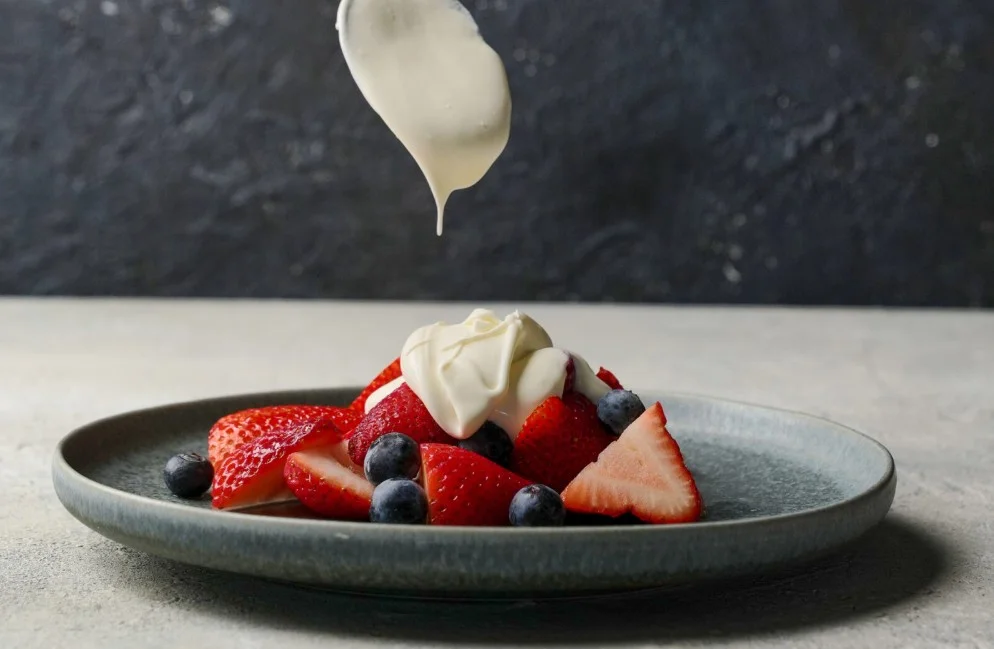
Create luxurious Crème Fraîche at home with just 60 seconds of active work. This homemade version is significantly cheaper and fresher than store-bought alternatives. It yields a rich, creamy, and tangy condiment that is perfect for thickening sauces, topping desserts, or finishing off scrambled eggs. Once you see how easy...
Read more... it is to ferment your own cream, you won’t want to buy it from the store again.
Read lessx saved
 eatgourmade Rising Star
December 15, 2025
Ingredients:
- 1 cup of heavy whipping cream
- 1 TBSP of buttermilk - cultured
Tools:
- 1x French Whisk
- 1x Medium Mixing Bowl (3 – 4 QT)
- 1x Airtight glass or plastic container with a lid (e.g., a Mason jar)
- 1x Food Thermometer (probe)
- 1x Seedling mat (to maintain warmer fermentation temperature) Optional
Directions:
1. Combine Ingredients:
- In a medium bowl (or directly in the container you plan to store it in), combine about ¼ of the heavy cream with the buttermilk.
- Whisk vigorously to eliminate any lumps and ensure the cultures are evenly distributed.
- Add the remaining heavy cream and whisk again until fully combined.
2. Cover and Ferment:
- Place the lid on the container.
- Leave the container on your kitchen counter at room temperature to ferment.
- Allow it to sit for 18 to 36 hours.
3. Check Consistency:
- Check the mixture after about 20 hours.
- You are looking for a cream that is thick enough to hold its shape when spooned; if it collapses, it needs more time.
Note: 18–24 hours usually produce the best texture. If you prefer a tangier flavor and thicker texture, allow it to sit longer.
4. Refrigerate:
- Once the crème fraîche has reached your desired thickness and taste, place it in the refrigerator.
- It will continue to thicken slightly as it chills.
Note: If a small amount of liquid (whey) collects on top, you can either spoon it off or leave it—it is perfectly fine.
Recipe Notes & Tips
- Yogurt Substitute: You can use yogurt instead of buttermilk, but you must double the amount (use 2 tbsp or 30g per cup of cream) to speed up the process. If you use only 1 tbsp of yogurt, fermentation can take 40–60 hours.
- Speeding Up the Process: You can warm it to 78–82°F using a fermentation chamber or seedling mat. This speeds up culturing. If using this method, check it after 18 hrs. 20–22 hrs is often ideal. Adding more cultures also speeds things up.
- Storage: This lasts a long time in the fridge and stabilizes sauces better than standard sour cream.
About the Author:
eatgourmadeRising Star
# 19
1 Followers
- Published Recipes: 1
- Member since: 2025-12-11
Recipes
Try Other Recipes from Same Category!
Easy Kimchi
 ChefLynn Cool Cook
Pie Crust Recipe
 Chef Jeff Cool Cook
Quark Plain Cheese Tvaroh Recipe
 Tom the Chef Founder
Pork Cracklings (Škvarky) & Lard (Sádlo) Recipe
Tom the Chef FounderItalian Sausage Recipe
Tom the Chef FounderGhee Recipe
Tom the Chef FounderVanilla Glaze
Tom the Chef FounderMarinara Sauce Recipe
Tom the Chef FounderPasta Dough
Tom the Chef FounderLo Mein Noodles from Scratch
Tom the Chef FounderDisclaimer
- General Information Content on this page above, including the content provided on www.CookingHub.com, including all recipes, articles, and other materials, is for general informational purposes only. This content reflects the personal opinions and experiences of its authors and is not intended to provide professional dietary, medical, legal, or political advice. Please consult a qualified professional before making any decisions based on the information presented here.
- Content Ownership and Use Content on this page above, including content published on CookingHub.com is owned by the individual authors who created it. Only the authors can access, modify, or delete their content from the platform. Our content may be embedded on third-party websites and blogs without modification. No reimbursement will be provided for this use. If an author removes content from CookingHub.com, it will no longer be available through any embedded links.
- Limitation of Liability Neither www.CookingHub.com (operated by the CookingHub Foundation) nor content authors are responsible for any outcome or consequence resulting from the use of information on this site. This includes, but is not limited to:
- Food Safety: Any health risk related to food handling, food quality, or failure to follow USDA recommendations (including minimum safe cooking temperatures).
- Preparation Safety: The proper and safe handling of cooking equipment or its suitability for any given task.
- Recipe Outcomes: The final look, taste, or success of following a recipe.
- Ingredients and Equipment: The sourcing of ingredients, tools, equipment, or anything else related to the preparation and consumption of food.
- Nutritional and Dietary Information: The accuracy of nutritional data. This information is provided as a courtesy and should not replace advice from a medical provider. You are responsible for verifying that a diet is suitable for your personal health needs.
- Errors and Omissions: Any potential errors, typos, or unclear directions in articles and recipes.
- User Responsibility All readers, visitors, and users of embedded content are solely responsible for evaluating recipes and articles. You must make your own decisions about whether to follow the steps and recommendations provided. It is your responsibility to ensure that ingredients and preparation methods are safe and appropriate for your personal dietary restrictions and health conditions.
Share
Click on the icons below to share "Title of the item to share"