
* Best is to use a rustic loaf or caraway bread, but it works great with any kind of white bread. Darker bread can be used, too, but it won’t allow the herb butter to stand up as much. Cut ½ loaf of the bread into even halves.
Twice-baked Herb Bread
4 servings
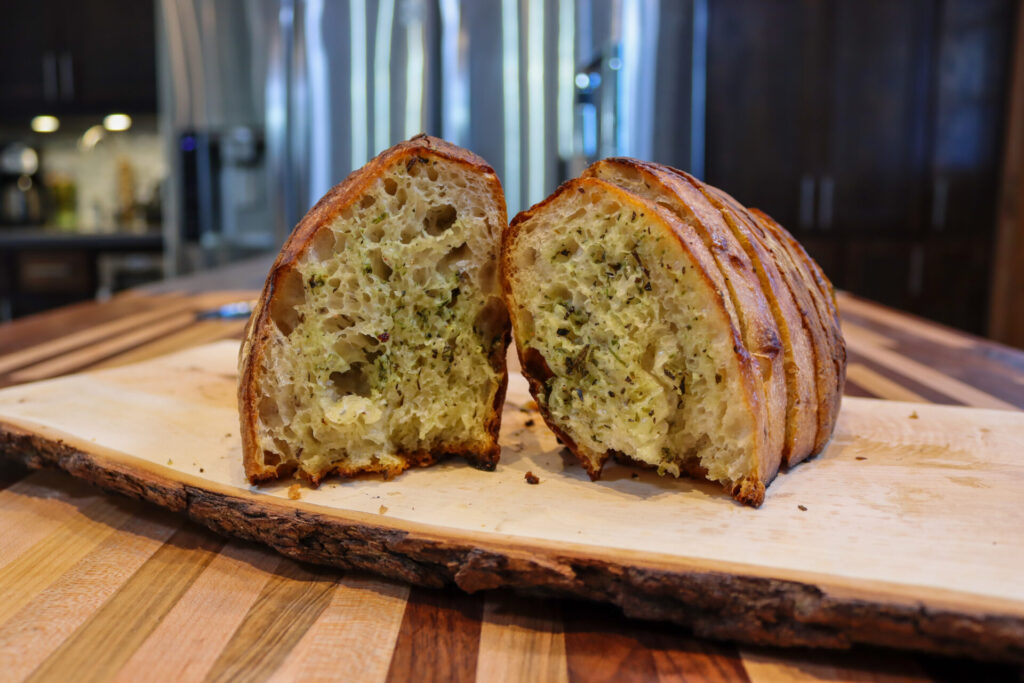
Twice-baked herb bread is not just a side dish, it’s a culinary experience. This bread, with its crispy exterior and soft, aromatic interior, is the perfect accompaniment to a variety of main dishes. It pairs exceptionally well with hearty foods like ribs and steaks, where it can soak up flavorful...
Read more... juices and sauces. But it’s also versatile enough to complement lighter dishes, adding a comforting and savory element to any meal. The secret to its irresistible texture and flavor lies in the twice-baking process and the blend of herbs used. Each bite delivers a delightful crunch, followed by the warm, earthy flavors of the herbs. Whether you’re hosting a dinner party or enjoying a quiet meal at home, this twice-baked herb bread is sure to elevate your dining experience.
Read lessx saved
 Tom the Chef Founder
November 10, 2023
Ingredients:
- ½ loaf of bread of your choice (store-bought or recipe here, *)
- 8 TBSP of herb butter (store-bought or recipe here, adjust if needed)
Tools:
- 1x Cutting Board
- 1x Serrated Bread Knife (or any dull knife to spread the butter)
- 1x Butter knife
- 1x Aluminum Foil
- 1x Baking Sheet
Directions:
1. Set grill or oven to preheat at 350°F (optionally up to 400°F).
2. On each quarter of the bread, cut individual and yet connected slices. The key is to not cut entirely through as you are slicing the quarter, so that all slices stay connected along the crust-side.
3. Spread between each slice herb butter.
4. Wrap each quarter of the bread in tinfoil and place on the grill or on the baking sheet and in the oven.
5. Bake until all butter melts and the bread turns crispy on the surface (about 25 – 30 minutes).
About the Author:
Tom the ChefFounder
# 1
210 Followers
- Published Recipes: 270
- Av. Recipe Evaluation:
- Location: Iowa, USA
- Member since: 2023-02-02
Recipes
Try Other Recipes from Same Category!
Easy Cranberry Sauce
Tom the Chef FounderCornbread
 Ethan. Rising Star
Buffalo Sauce Recipe
Tom the Chef FounderSoft Dinner Rolls Recipe
 Sarah Cool Cook
Queso Recipe Without Flour
Sarah Cool CookPork Cracklings (Škvarky) & Lard (Sádlo) Recipe
Tom the Chef FounderMustard Sauce
Tom the Chef FounderHollandaise Sauce
Tom the Chef FounderSmashed Potatoes
 The Headless Chef Resident Chef
Dill Sauce
Tom the Chef FounderDisclaimer
- General Information Content on this page above, including the content provided on www.CookingHub.com, including all recipes, articles, and other materials, is for general informational purposes only. This content reflects the personal opinions and experiences of its authors and is not intended to provide professional dietary, medical, legal, or political advice. Please consult a qualified professional before making any decisions based on the information presented here.
- Content Ownership and Use Content on this page above, including content published on CookingHub.com is owned by the individual authors who created it. Only the authors can access, modify, or delete their content from the platform. Our content may be embedded on third-party websites and blogs without modification. No reimbursement will be provided for this use. If an author removes content from CookingHub.com, it will no longer be available through any embedded links.
- Limitation of Liability Neither www.CookingHub.com (operated by the CookingHub Foundation) nor content authors are responsible for any outcome or consequence resulting from the use of information on this site. This includes, but is not limited to:
- Food Safety: Any health risk related to food handling, food quality, or failure to follow USDA recommendations (including minimum safe cooking temperatures).
- Preparation Safety: The proper and safe handling of cooking equipment or its suitability for any given task.
- Recipe Outcomes: The final look, taste, or success of following a recipe.
- Ingredients and Equipment: The sourcing of ingredients, tools, equipment, or anything else related to the preparation and consumption of food.
- Nutritional and Dietary Information: The accuracy of nutritional data. This information is provided as a courtesy and should not replace advice from a medical provider. You are responsible for verifying that a diet is suitable for your personal health needs.
- Errors and Omissions: Any potential errors, typos, or unclear directions in articles and recipes.
- User Responsibility All readers, visitors, and users of embedded content are solely responsible for evaluating recipes and articles. You must make your own decisions about whether to follow the steps and recommendations provided. It is your responsibility to ensure that ingredients and preparation methods are safe and appropriate for your personal dietary restrictions and health conditions.
Share
Click on the icons below to share "Title of the item to share"