


Cook, Learn, and Share to Fight Hunger.
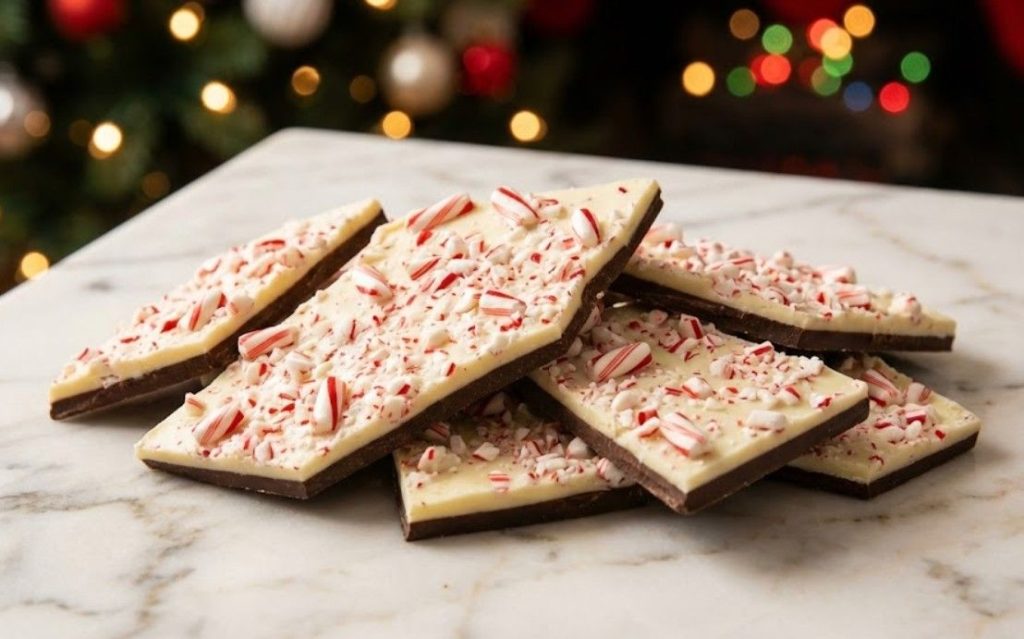
Homemade Peppermint Bark on the countertop in the detail shot
  • 20 min.
  • 1 h. 20 min.
  • 2/5

Ingredients:

Ingredients

  • 12 OZ of semi-sweet chocolate (high-quality bars) - chopped
  • 12 OZ of white chocolate (high-quality bars) - chopped
  • 1 TSP of peppermint extract
  • ¾ cups of crushed candy canes or peppermint candies

Tools:

Directions:

1. The Dark Chocolate Base Layer:

  • Line a large baking sheet with parchment paper or a silicone baking mat.
  • Place the chopped semi-sweet chocolate in a microwave-safe bowl.
  • Microwave in 30-second intervals, stirring vigorously between each interval, until the chocolate is completely smooth and melted.
  • Stir in ½ teaspoon of the peppermint extract.
  • Pour the melted chocolate onto the prepared baking sheet. Use an offset spatula to spread it into a rectangle about ¼-inch thick.
  • Place the tray in the refrigerator for about 15–20 minutes. It should be set but not rock-hard.

2. The White Chocolate Layer:

  • While the base is chilling, place the chopped white chocolate in a clean microwave-safe bowl.
  • Microwave in shorter, 20-second intervals, stirring gently between each. White chocolate burns easily, so stop when there are still small lumps and stir until they melt from the residual heat.
  • Stir in the remaining ½ teaspoon of peppermint extract.
  • Remove the baking sheet from the fridge. Pour the melted white chocolate over the dark chocolate layer.
  • Working quickly, spread the white chocolate gently with the spatula to cover the dark layer evenly.

3. Topping and Setting the Homemade Peppermint Bark:

  • Immediately sprinkle the crushed candy canes over the wet white chocolate, pressing them down very slightly to ensure they adhere.
  • Return the tray to the refrigerator and chill for at least 45 minutes to 1 hour, or until the bark is completely firm.
  • Once fully set, lift the bark off the parchment paper.
  • Use your hands (or a knife for cleaner lines) to snap the bark into jagged, rustic pieces.
  • Store the Homemade Peppermint Bark in an airtight container in a cool place or the refrigerator.

Best Served With

  • Hot Cocoa: Dip the bark into the hot drink for a minty chocolate melt.
  • Espresso: The intense coffee flavor cuts through the sweetness of the white chocolate.
  • Holiday Cookie Platter: Serves as a great textural contrast to soft sugar cookies or gingerbread.
About the Author:
SarahCool Cook
# 7
  • Published Recipes: 15
  • Av. Recipe Evaluation:
  • Location: California, USA
  • Member since: 2024-09-15

Comments

Disclaimer

  1. General Information Content on this page above, including the content provided on www.CookingHub.com, including all recipes, articles, and other materials, is for general informational purposes only. This content reflects the personal opinions and experiences of its authors and is not intended to provide professional dietary, medical, legal, or political advice. Please consult a qualified professional before making any decisions based on the information presented here.
  2. Content Ownership and Use Content on this page above, including content published on CookingHub.com is owned by the individual authors who created it. Only the authors can access, modify, or delete their content from the platform. Our content may be embedded on third-party websites and blogs without modification. No reimbursement will be provided for this use. If an author removes content from CookingHub.com, it will no longer be available through any embedded links.
  3. Limitation of Liability Neither www.CookingHub.com (operated by the CookingHub Foundation) nor content authors are responsible for any outcome or consequence resulting from the use of information on this site. This includes, but is not limited to:
    • Food Safety: Any health risk related to food handling, food quality, or failure to follow USDA recommendations (including minimum safe cooking temperatures).
    • Preparation Safety: The proper and safe handling of cooking equipment or its suitability for any given task.
    • Recipe Outcomes: The final look, taste, or success of following a recipe.
    • Ingredients and Equipment: The sourcing of ingredients, tools, equipment, or anything else related to the preparation and consumption of food.
    • Nutritional and Dietary Information: The accuracy of nutritional data. This information is provided as a courtesy and should not replace advice from a medical provider. You are responsible for verifying that a diet is suitable for your personal health needs.
    • Errors and Omissions: Any potential errors, typos, or unclear directions in articles and recipes.
  4. User Responsibility All readers, visitors, and users of embedded content are solely responsible for evaluating recipes and articles. You must make your own decisions about whether to follow the steps and recommendations provided. It is your responsibility to ensure that ingredients and preparation methods are safe and appropriate for your personal dietary restrictions and health conditions.