


Cook, Learn, and Share to Fight Hunger.
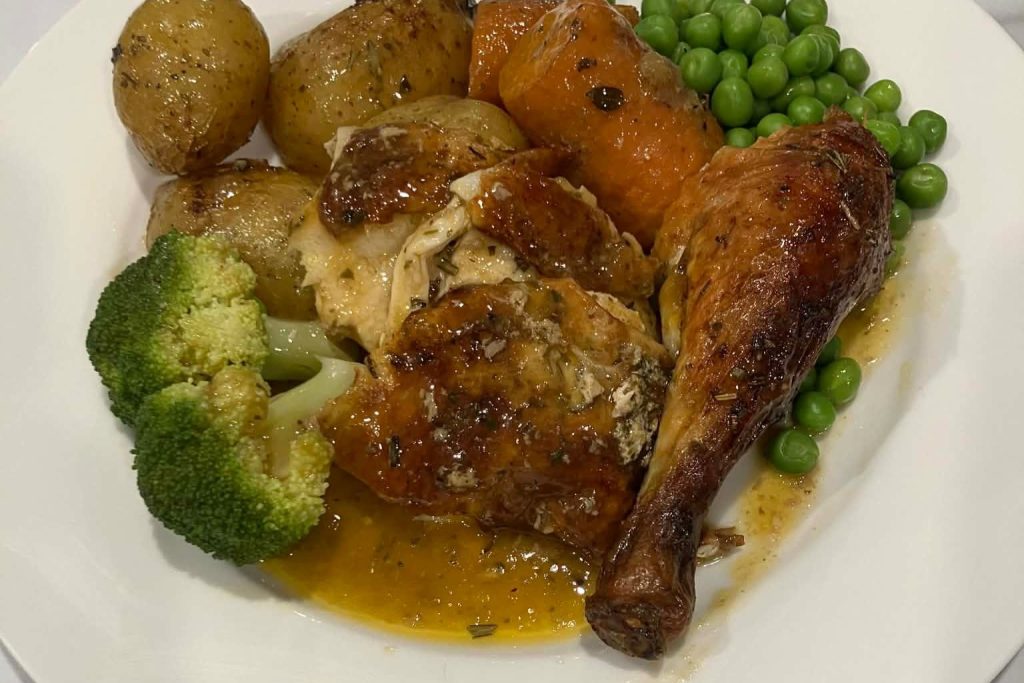
Crispy Herb Roast Chicken with Gravy in the detail shot
  • 100 min.
  • 100 min.
  • 1/5

Ingredients:

For the Chicken:

For the Roasting Base:

For the Gravy:

Directions:

1. Prep the Chicken (CRUCIAL STEP):

  • Preheat oven to 200°C fan / 220°C regular / 425°F.
  • Pat the chicken completely dry with paper towels — this is key for crispy skin.
  • Mix olive oil or butter with garlic powder, onion powder, paprika, rosemary, sage, oregano, salt, and pepper.
  • Rub all over the chicken, including under the skin if possible.
  • Stuff the cavity with onion, garlic, and parsley.

2. Prepare the Roasting Pan:

  • Scatter the whole potatoes, carrots, onion wedges, and garlic cloves in a large roasting dish.
  • Place the chicken breast-side up on top of the vegetables.
  • Pour 1.5 cups chicken stock into the pan (around the veg, not over the chicken).

3. Roast and Baste:

  • Roast for 1 hr 15–1 hr 25 mins, depending on size.
  • Baste the chicken once or twice with the pan juices during cooking.
  • Chicken is done when the thickest part reaches 75°C / 165°F and juices run clear.
  • For extra colour and crispness, increase oven to 230°C / 450°F for the final 10 minutes if needed.

4. Rest:

  • Remove chicken from the pan and rest for 10–15 minutes before carving.
  • Transfer potatoes and carrots to a serving dish and keep warm.

5. Make the Cornflour Gravy:

  • Pour pan juices into a small pot and skim off excess fat.
  • Bring to a gentle simmer, then whisk in the cornflour slurry.
  • Cook for 2–3 minutes until glossy and thickened.
  • Season to taste, adding Dijon or soy if using.

6. Serve:

  • Carve the chicken and serve with whole roasted potatoes and carrots.
  • Spoon over the rich, glossy gravy and finish with fresh parsley.
* Check with a food thermometer to make sure that you have reached the minimum recommended safe serving temperature for poultry of 165°F.
Kitchen Guide

Poultry

The USDA minimum safe internal temperature is 165°F.

The popular serving temperature is the same as the minimum serving temperature.

About the Author:
The Headless ChefResident Chef
# 2
  • Published Recipes: 31
  • Av. Recipe Evaluation:
  • Location: Wellington, New Zealand
  • Member since: 2024-09-10

Comments

Disclaimer

  1. General Information Content on this page above, including the content provided on www.CookingHub.com, including all recipes, articles, and other materials, is for general informational purposes only. This content reflects the personal opinions and experiences of its authors and is not intended to provide professional dietary, medical, legal, or political advice. Please consult a qualified professional before making any decisions based on the information presented here.
  2. Content Ownership and Use Content on this page above, including content published on CookingHub.com is owned by the individual authors who created it. Only the authors can access, modify, or delete their content from the platform. Our content may be embedded on third-party websites and blogs without modification. No reimbursement will be provided for this use. If an author removes content from CookingHub.com, it will no longer be available through any embedded links.
  3. Limitation of Liability Neither www.CookingHub.com (operated by the CookingHub Foundation) nor content authors are responsible for any outcome or consequence resulting from the use of information on this site. This includes, but is not limited to:
    • Food Safety: Any health risk related to food handling, food quality, or failure to follow USDA recommendations (including minimum safe cooking temperatures).
    • Preparation Safety: The proper and safe handling of cooking equipment or its suitability for any given task.
    • Recipe Outcomes: The final look, taste, or success of following a recipe.
    • Ingredients and Equipment: The sourcing of ingredients, tools, equipment, or anything else related to the preparation and consumption of food.
    • Nutritional and Dietary Information: The accuracy of nutritional data. This information is provided as a courtesy and should not replace advice from a medical provider. You are responsible for verifying that a diet is suitable for your personal health needs.
    • Errors and Omissions: Any potential errors, typos, or unclear directions in articles and recipes.
  4. User Responsibility All readers, visitors, and users of embedded content are solely responsible for evaluating recipes and articles. You must make your own decisions about whether to follow the steps and recommendations provided. It is your responsibility to ensure that ingredients and preparation methods are safe and appropriate for your personal dietary restrictions and health conditions.