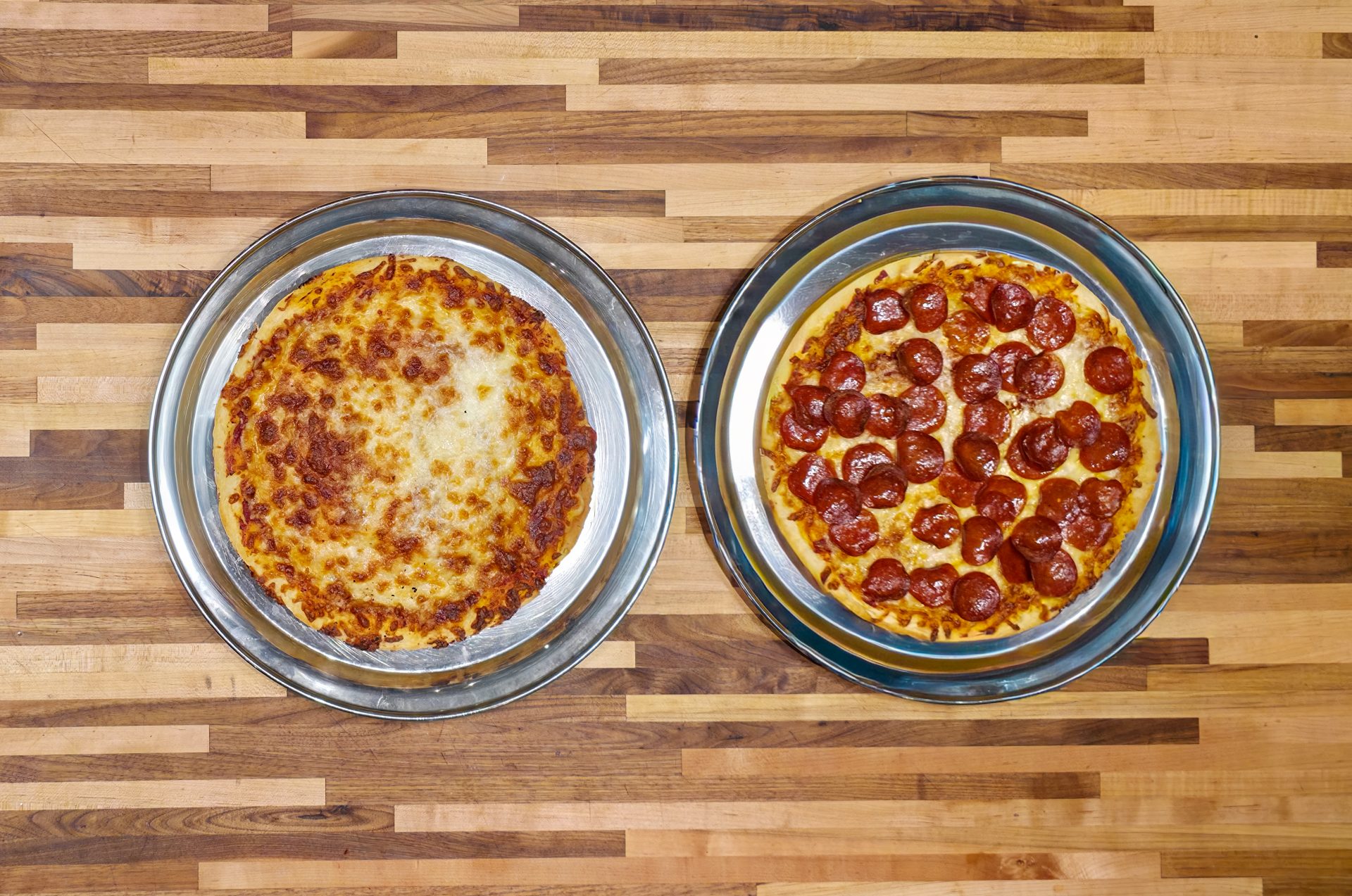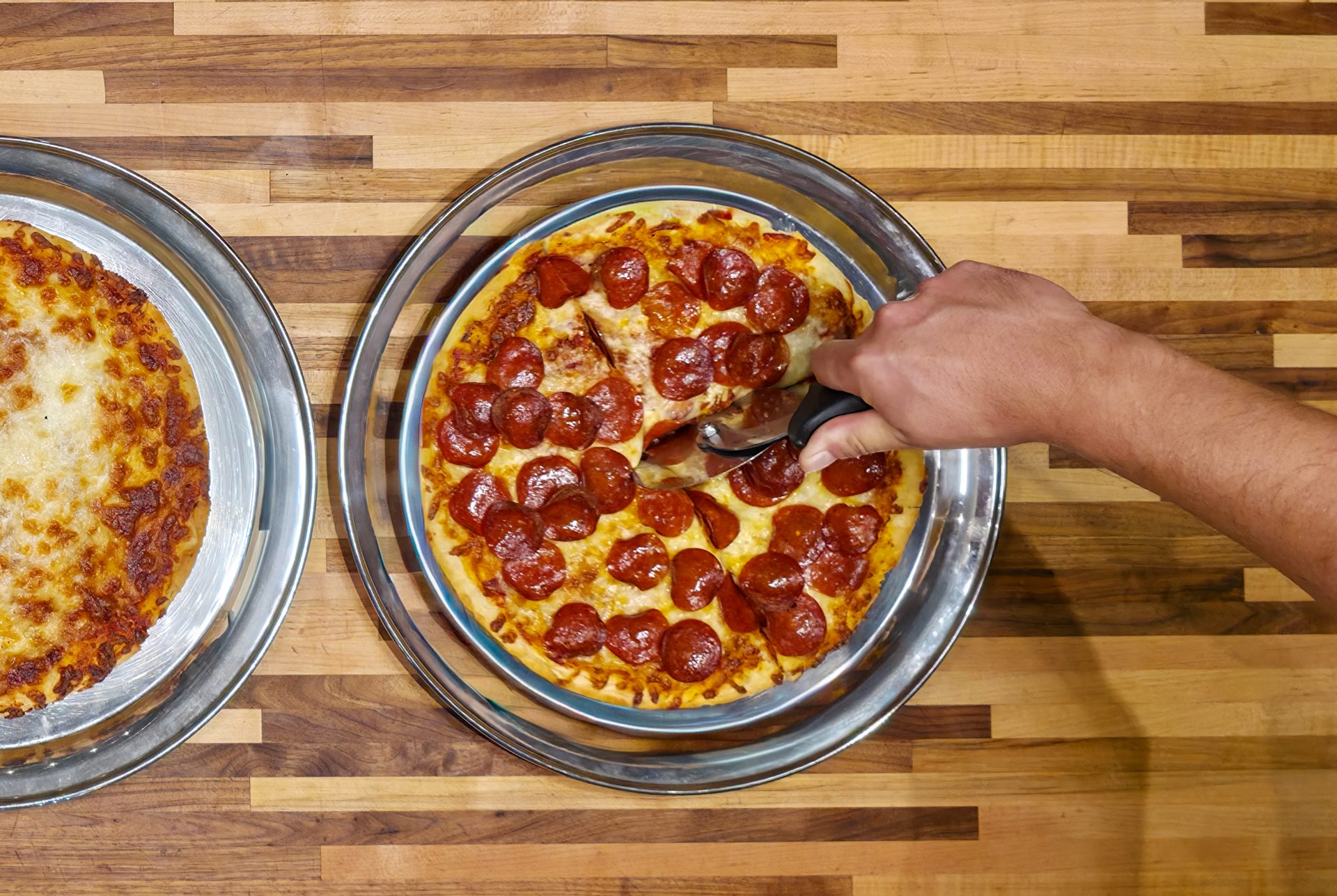
Cook, Learn, and Share to Fight Hunger.
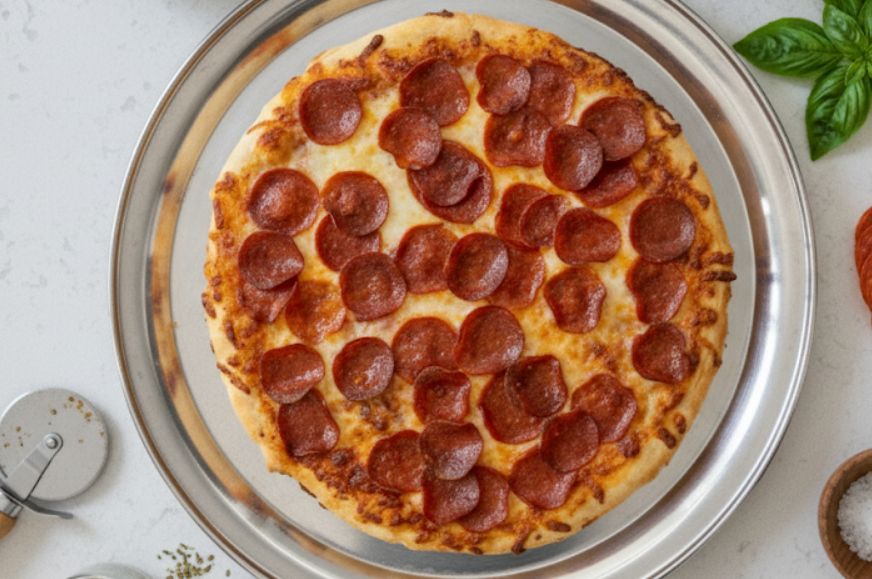
60 min. Pan Pizza on the stainless steel tray, top close up shot
  • 30 min.
  • 1 h.
  • 1/5

Ingredients:

Pizza Dough:

Greasing:

Sauce: ***

Toppings:

  • 1 LB of mozzarella cheese - shredded (adjust if needed, about 3 ½ cups) (or more for the cheesy pizzas)
  • ¼ - ½ LB of pepperoni salami - sliced (adjust if needed, ****)

* Optionally, substitute with all-purpose flour

** For this recipe, it is absolutely crucial to use yeast that is not expired or compromised. Make sure that your yeast is in a perfectly sealed pouch right before using it. If you are using part of a bulk package of yeast, make sure that it was properly stored in a sealed container in the refrigerator for no more than six months. Failure to do so may result in denser pizzas.

*** The amount of sauce in the recipe is designed to use the entire can of diced tomatoes as well as the entire can of tomato paste to prevent you from having leftover cans and to prevent the necessity of measuring. Use an amount of the sauce you like, up to half of the total amount for each saucy pizza, or a quarter of the amount for pizza with a moderate quantity of sauce, based on your preference. If you do not use all the sauce, feel free to store it in the refrigerator for up to one day or in the freezer for up to half a year for your next pizza project.

****A ¼ LB of pepperoni is enough for both pizzas. But since my wife is a vegetarian and I love pepperoni, I use the entire ¼ LB just for my pizza, as you can see in the pictures.
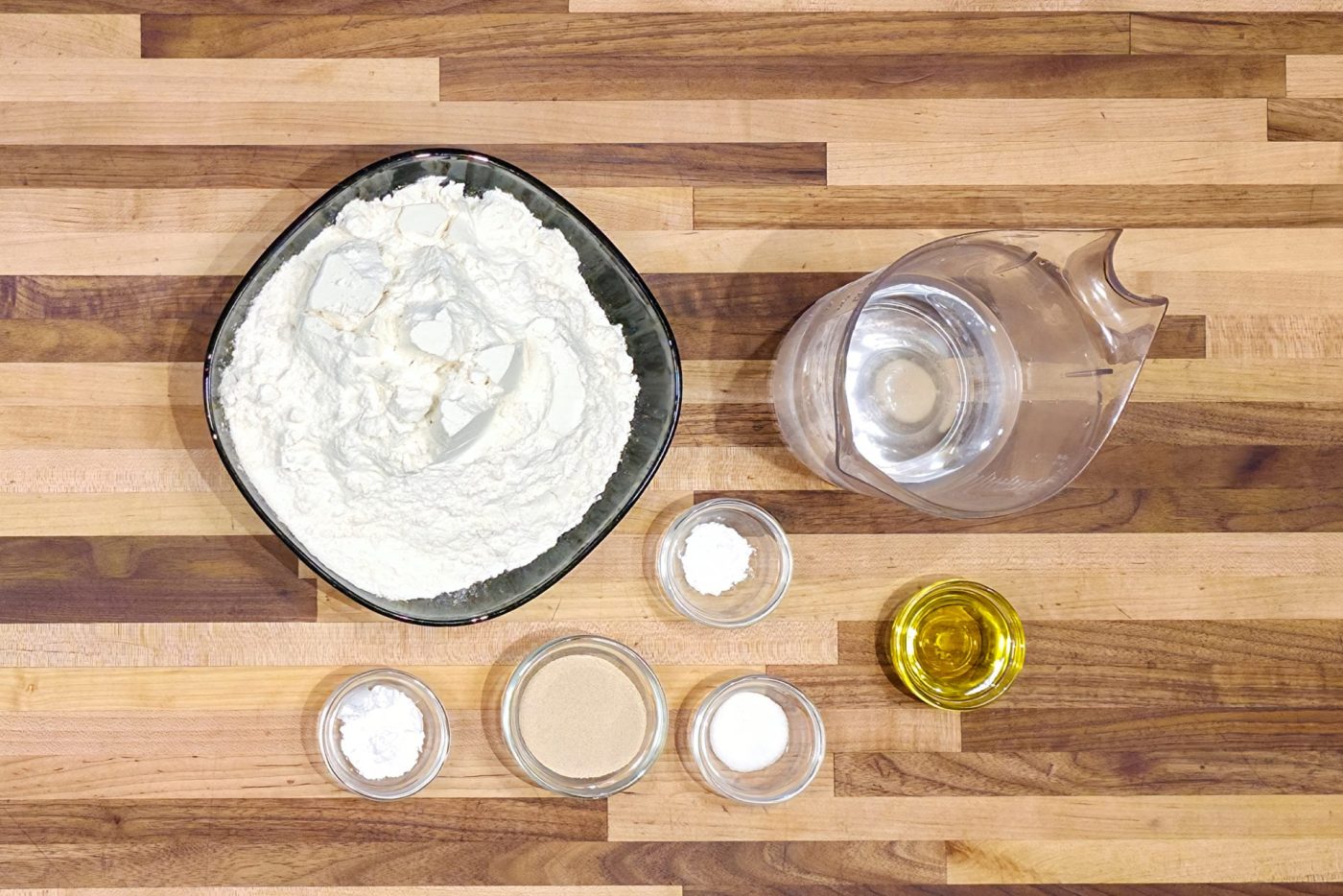
Tools:

Directions:

60 min. pan pizza = steps-01

1. Dough:

Let’s start the 60-minute Pan Pizza by preparing the dough.

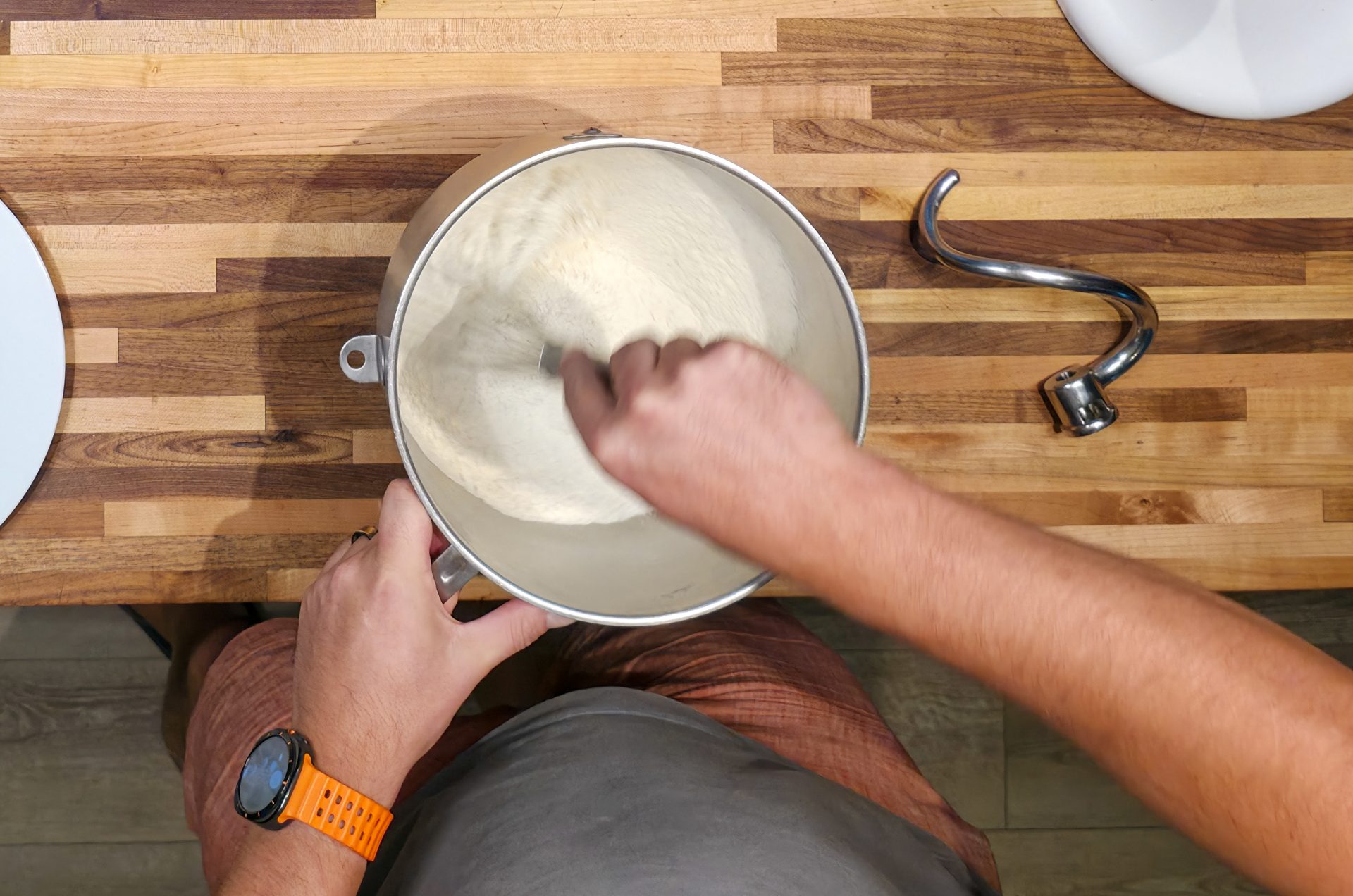
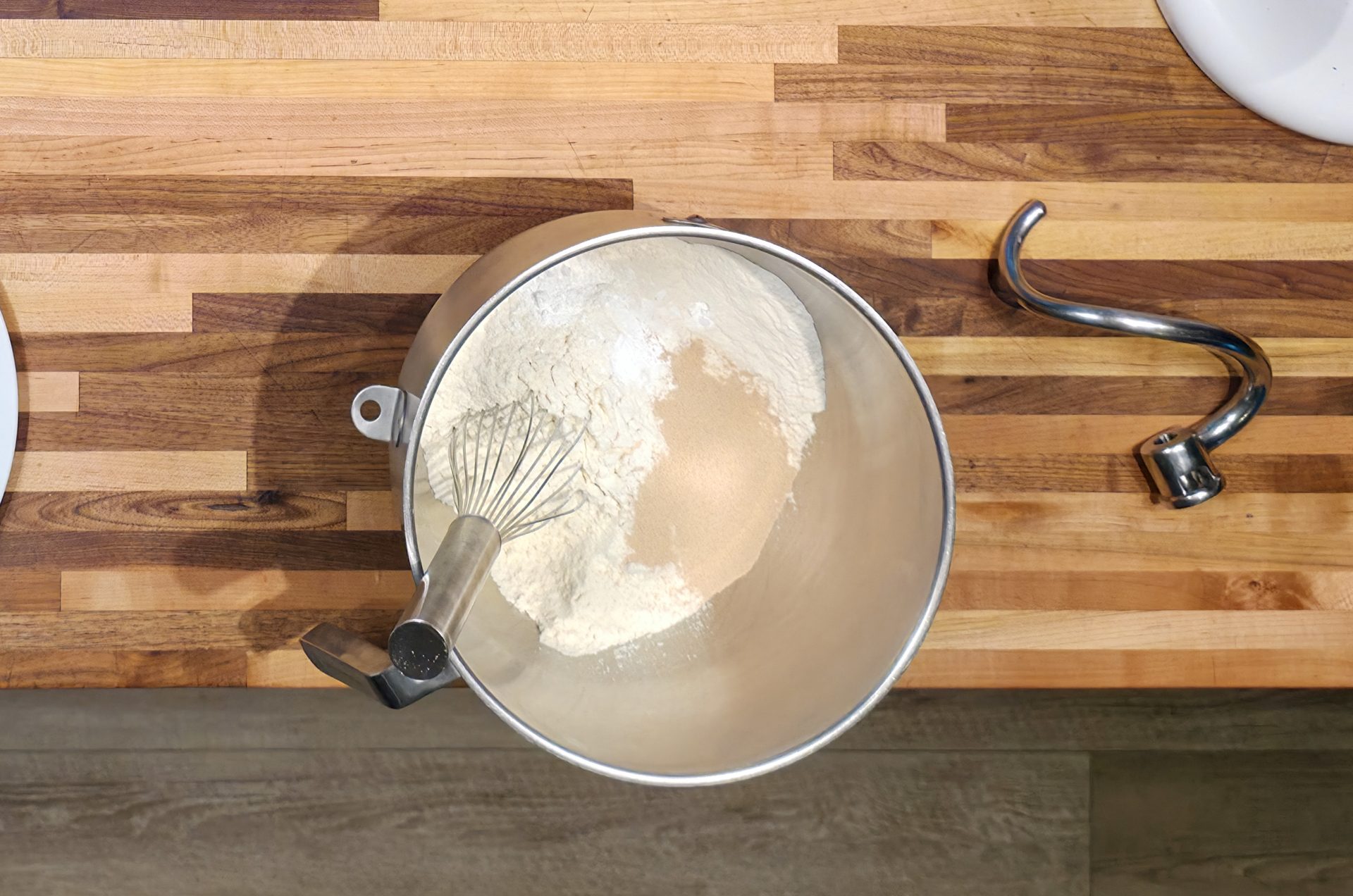
1.1. Place into a kitchen mixing bowl:

3 cups of bread flour
2 TSP of confectioners’ sugar
5 TSP of active dry yeast
½ TSP of baking powder
1 TSP of salt

Briefly stir with a whisk just enough to combine all ingredients (about 30 minutes).

60 min. pan pizza = steps-0360 min. pan pizza = steps-04

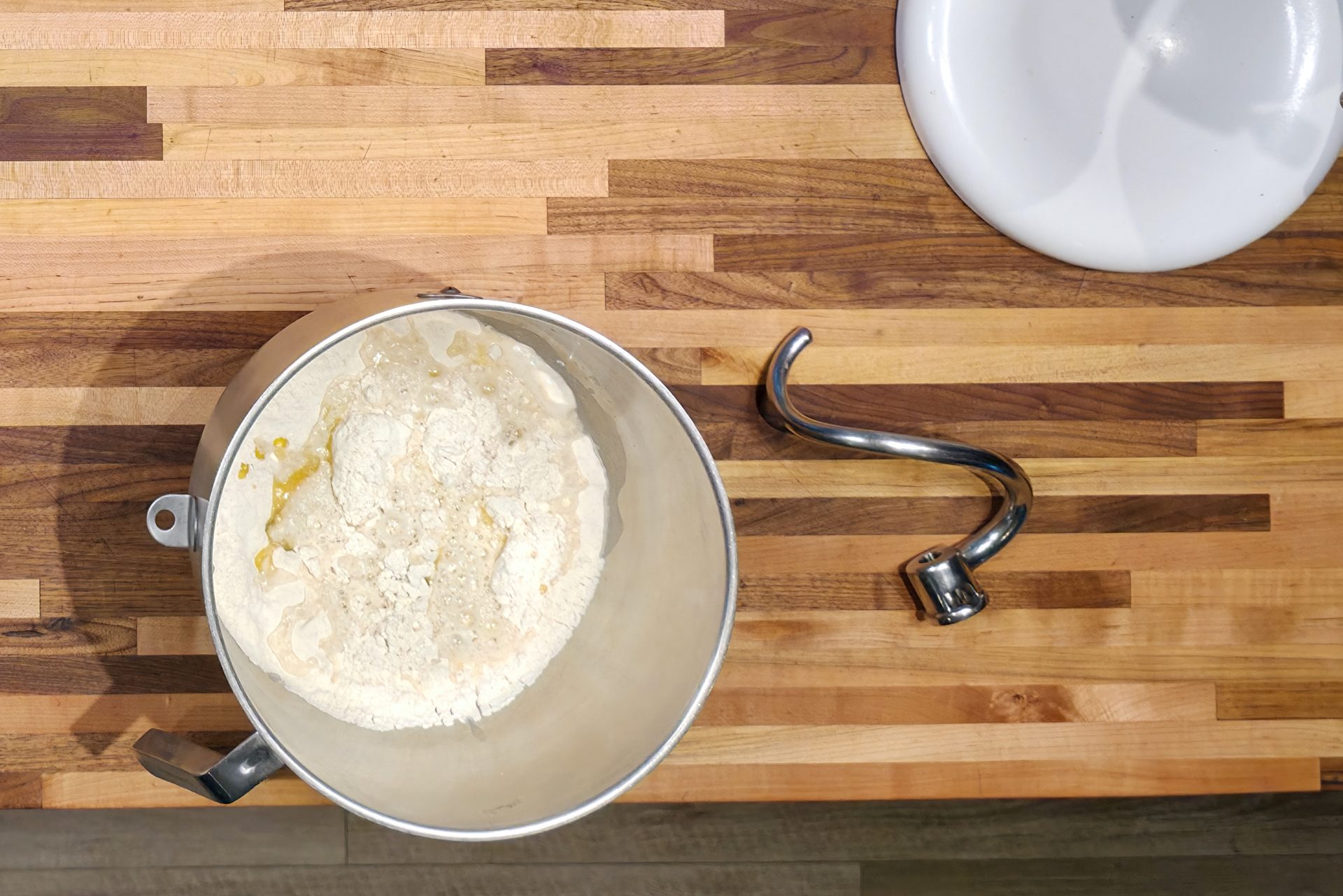
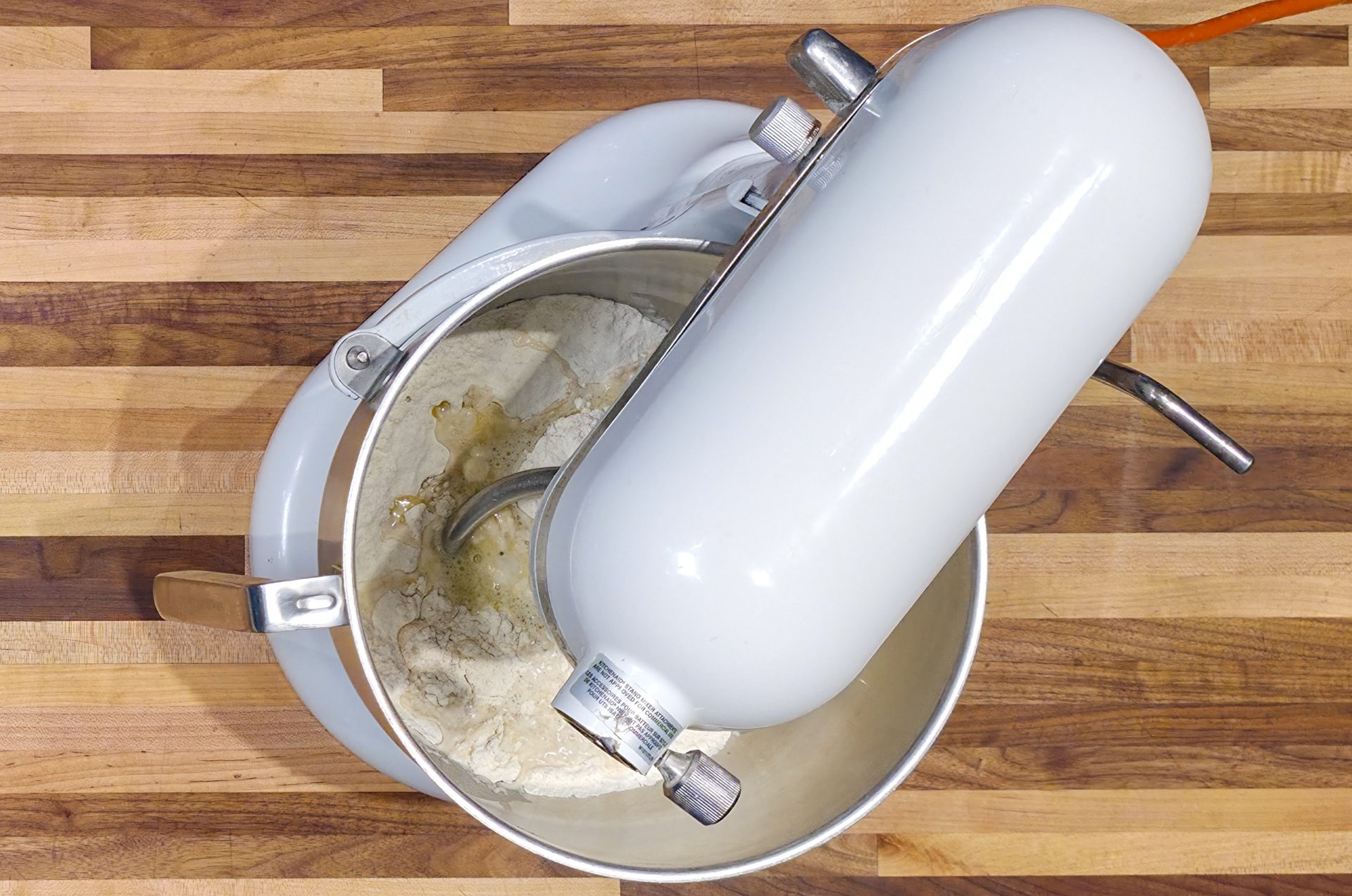
1.2. Add:

1 ½ cups of warm water
2 TBSP of Extra Virgin Olive Oil

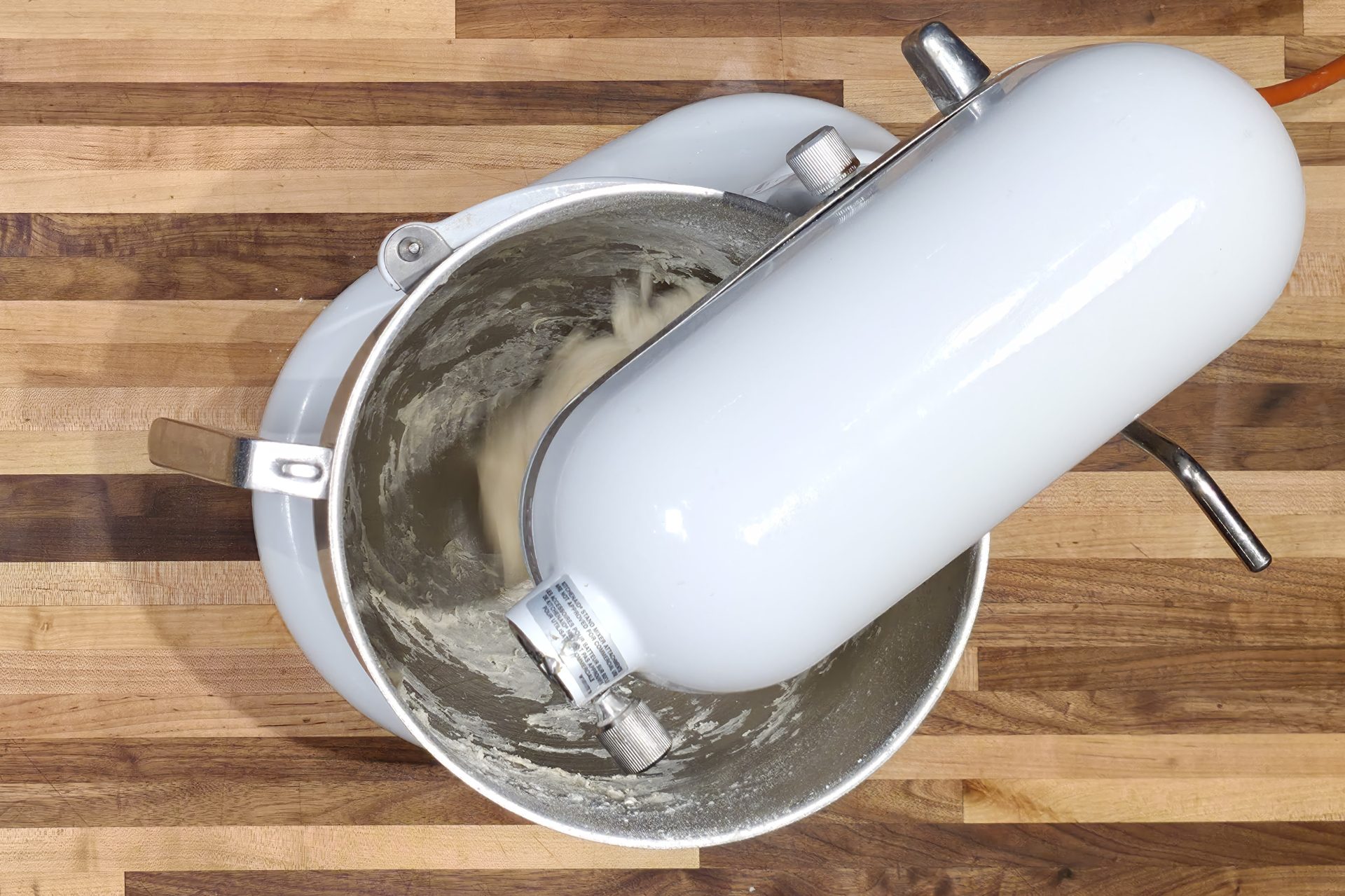
Knead on low speed until all ingredients are partially incorporated (about 1 minute).

60 min. pan pizza = steps-0560 min. pan pizza = steps-06

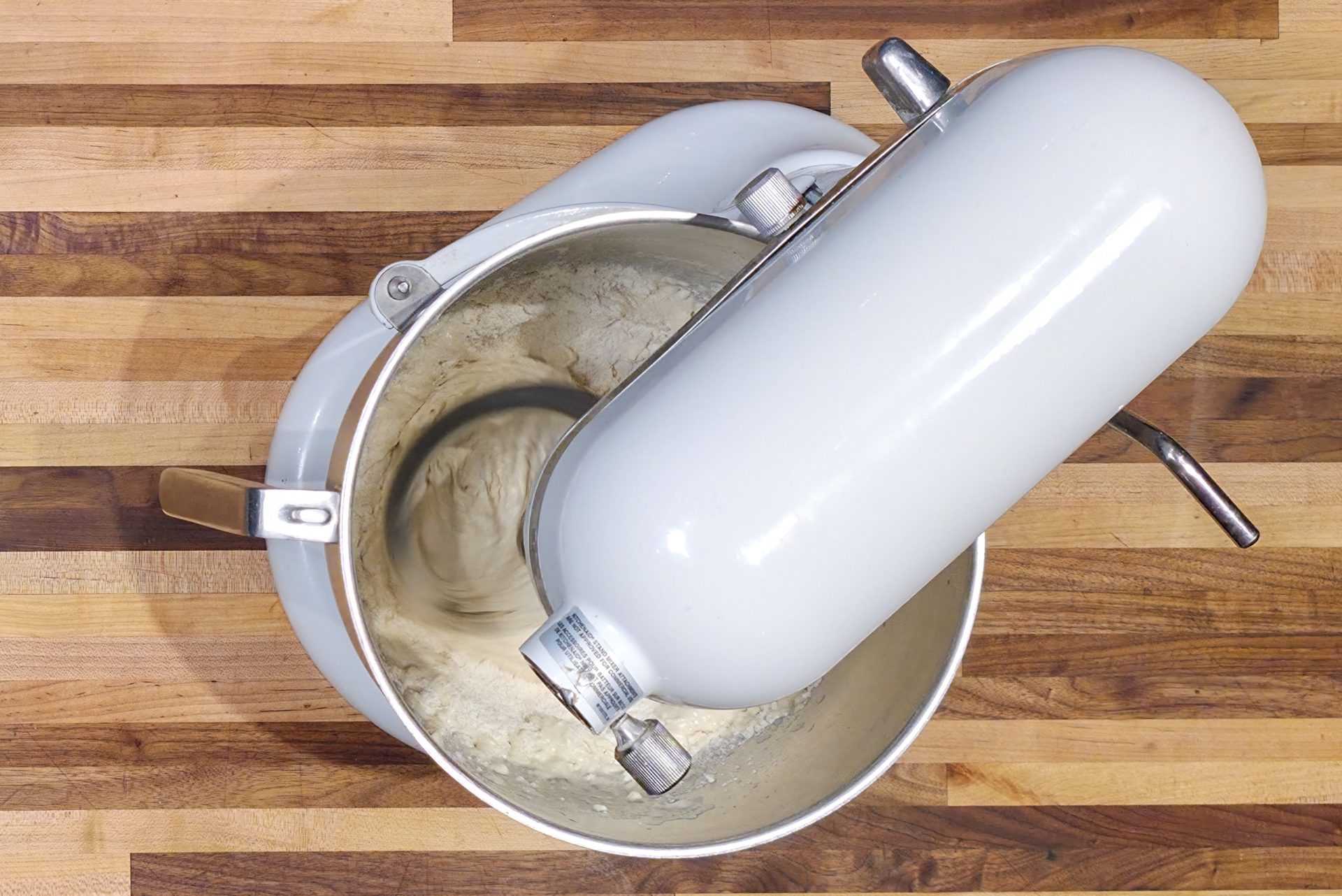
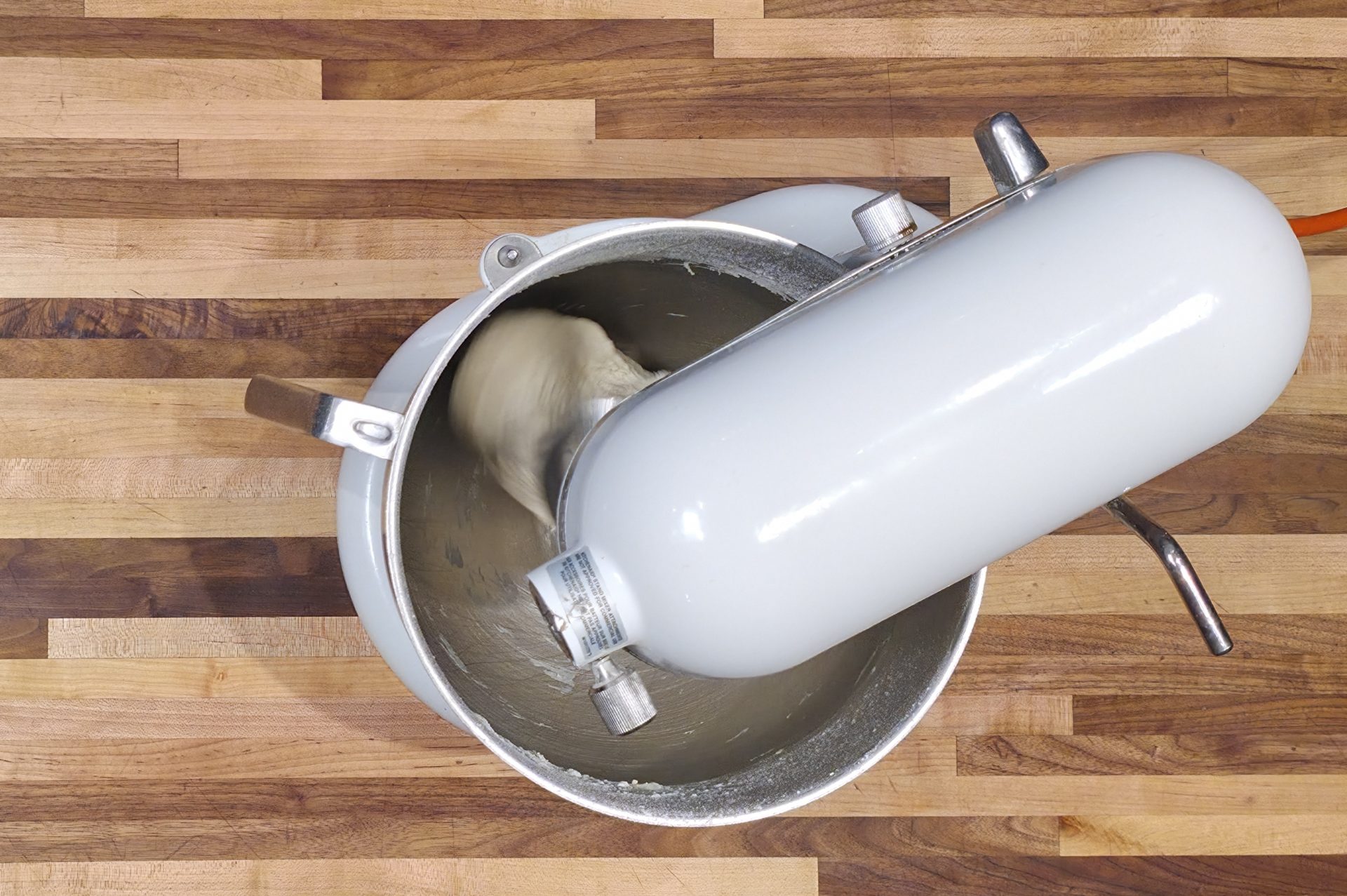
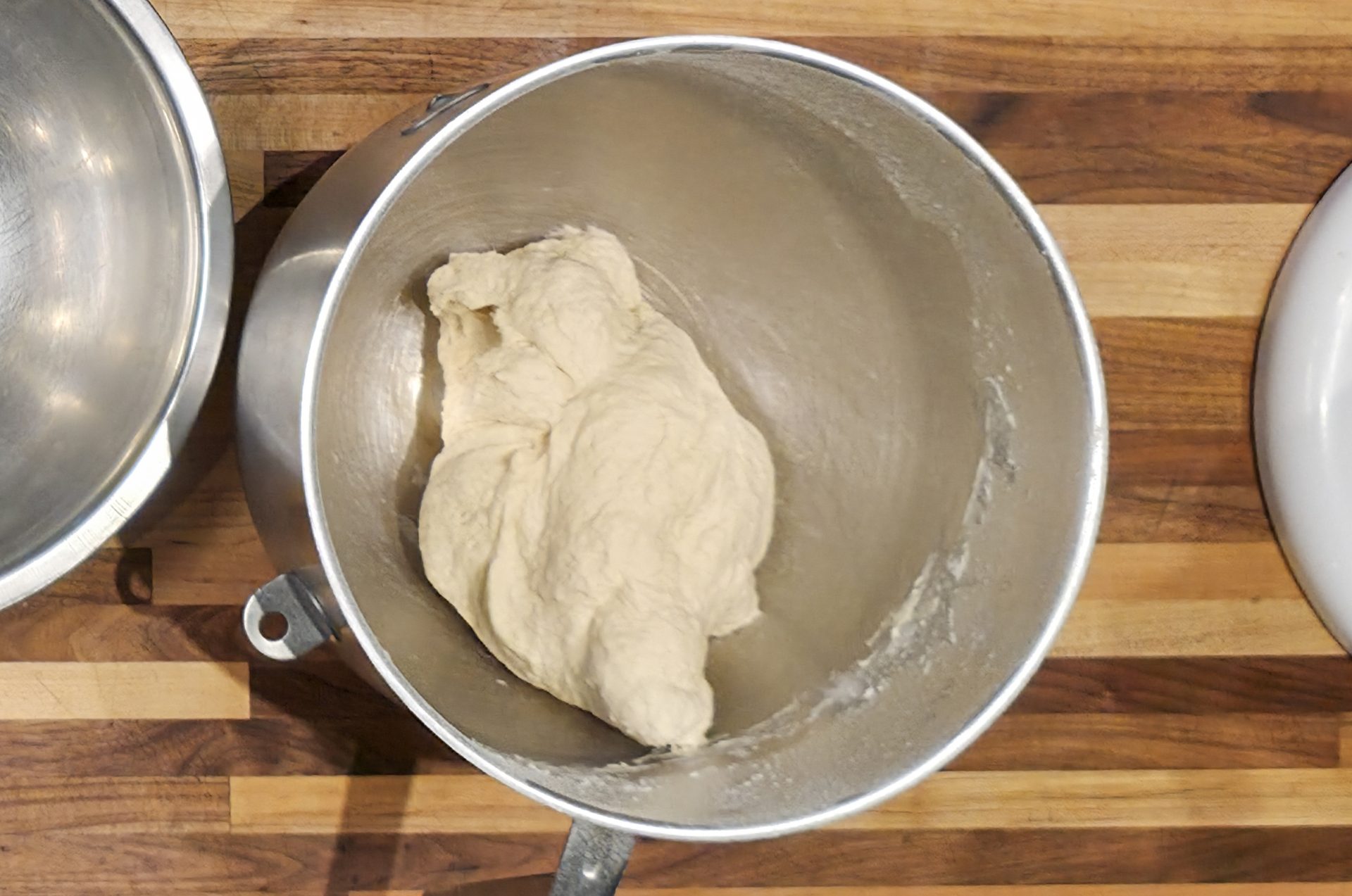
1.3. Then, increase the speed to medium-high and knead until a compact dough, which stops sticking to the bottom of the mixing bowl, forms (usually about 2–4 minutes).

Note:
The “no sticking” part applies only when the dough is being processed. When you turn off the mixer, the dough will rest and be a little sticky, which is okay.

60 min. pan pizza = steps-0760 min. pan pizza = steps-0860 min. pan pizza = steps-0960 min. pan pizza = steps-10

2. Rising the Dough:

Note: This is a fast-rising dough, thanks to a large amount of yeast and the use of baking powder, which together will give the pizza a perfect texture.

2.1.

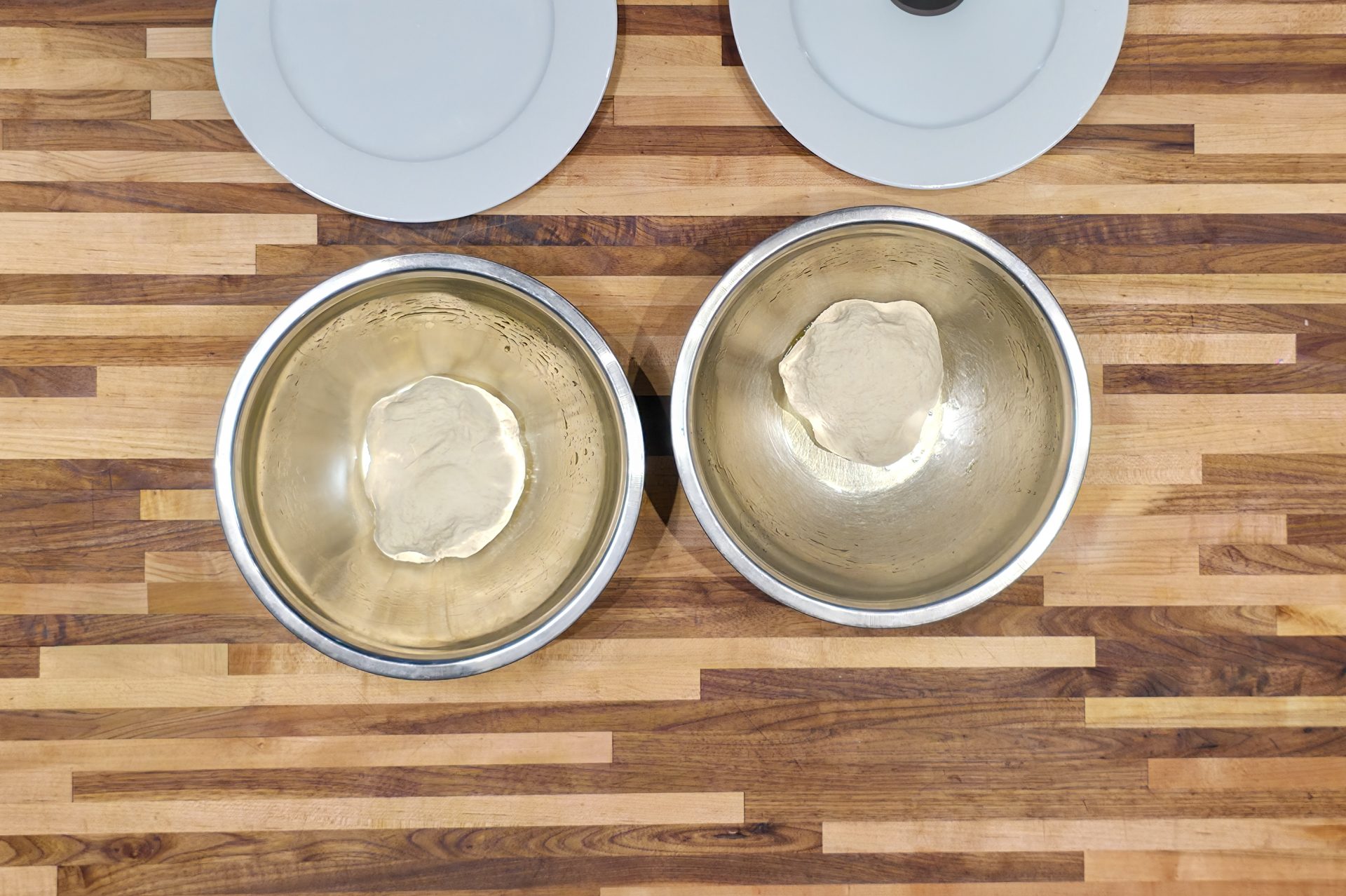
Gently drizzle oil into each of the two medium mixing bowls, and then gently distribute it with a silicone brush.

60 min. pan pizza = steps-1160 min. pan pizza = steps-12

2.2.

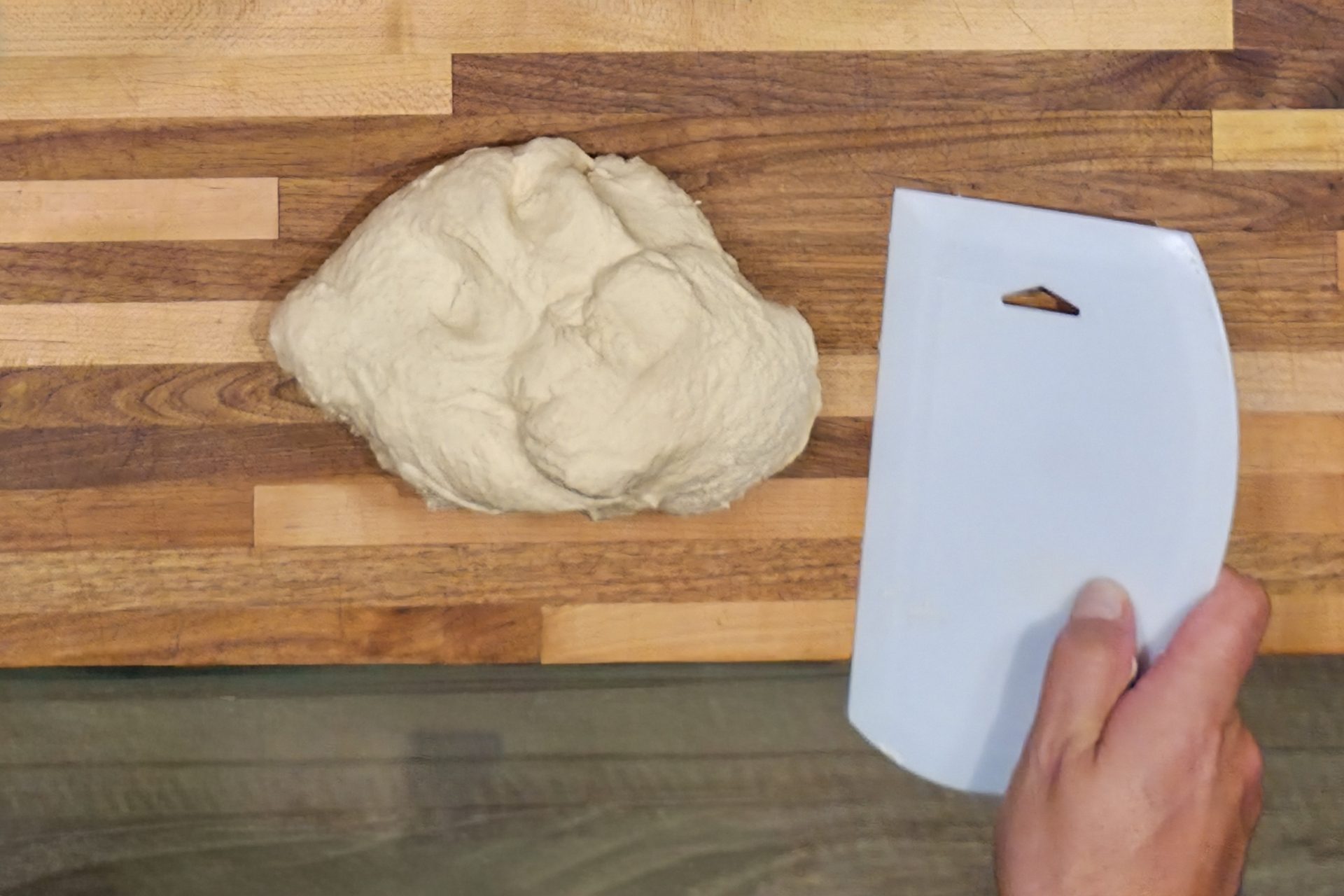
Remove the dough from the mixing bowl and split it into two even pieces using a bowl scraper or spatula.

60 min. pan pizza = steps-1360 min. pan pizza = steps-14

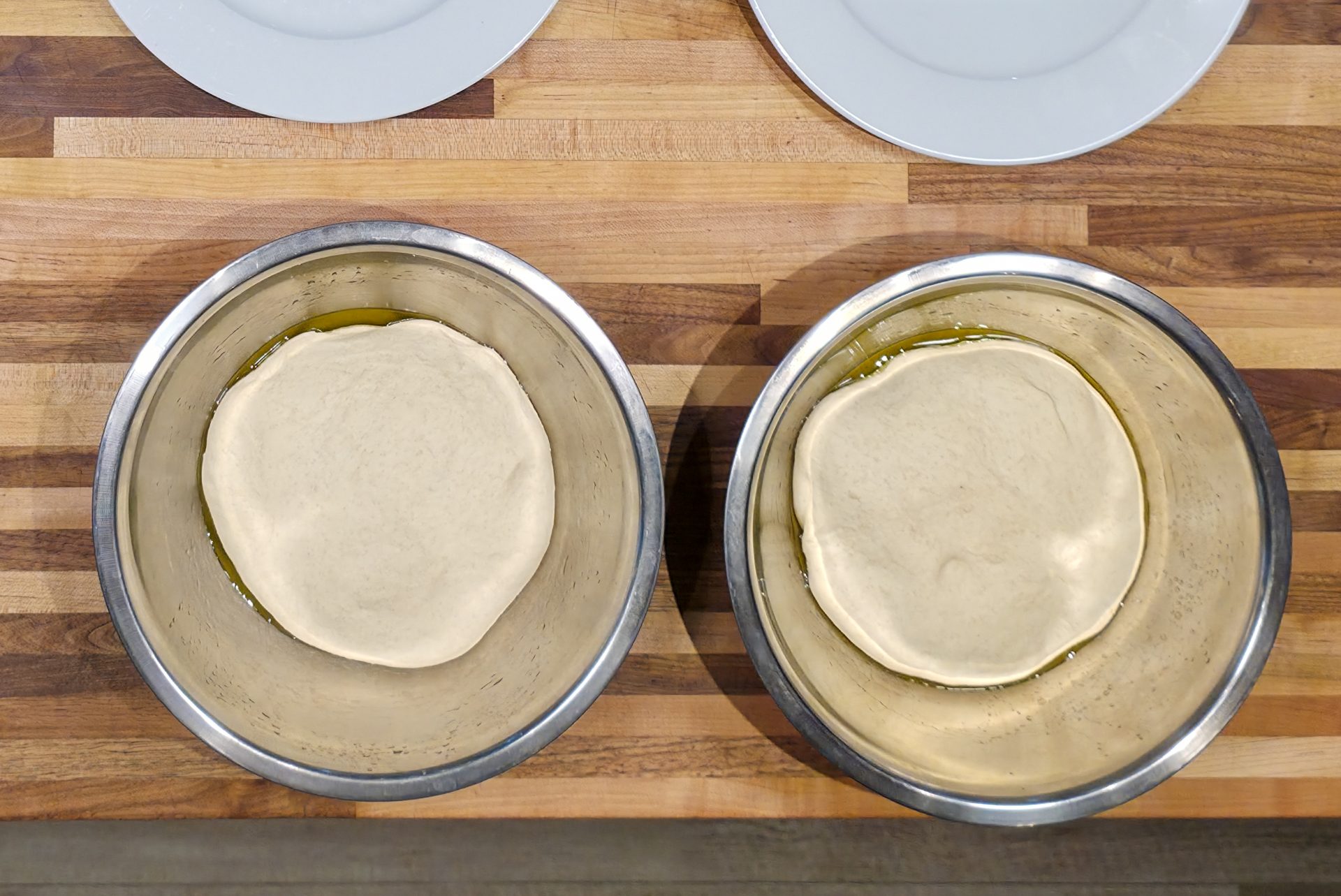
2.3. Place each piece into an individual medium mixing bowl, cover both with a plate or plastic wrap, and let them rise until doubled in a warm place (usually for 20 – 30 minutes).

Notes:

  • A warm place would be considered the oven set to a bread-proofing/rising program, or a slightly preheated oven turned off (with a comfortable, sauna-like temperature), or place it near a source of heat.
  • Alternatively, let it rise at room temperature for 30 minutes.
60 min. pan pizza = steps-1560 min. pan pizza = steps-23

2.4.

Optional Steps: For a fuller taste of your pizza dough, deflate the dough after the first 20 or 30 minutes of rising by gently pressing down with your hands. Cover the dough and let it rise again for another 20 or 30 minutes.
3. Shaping Pizzas:

3.1.

Set oven to preheat to 400°F, using either the regular or convection program.

3.2.

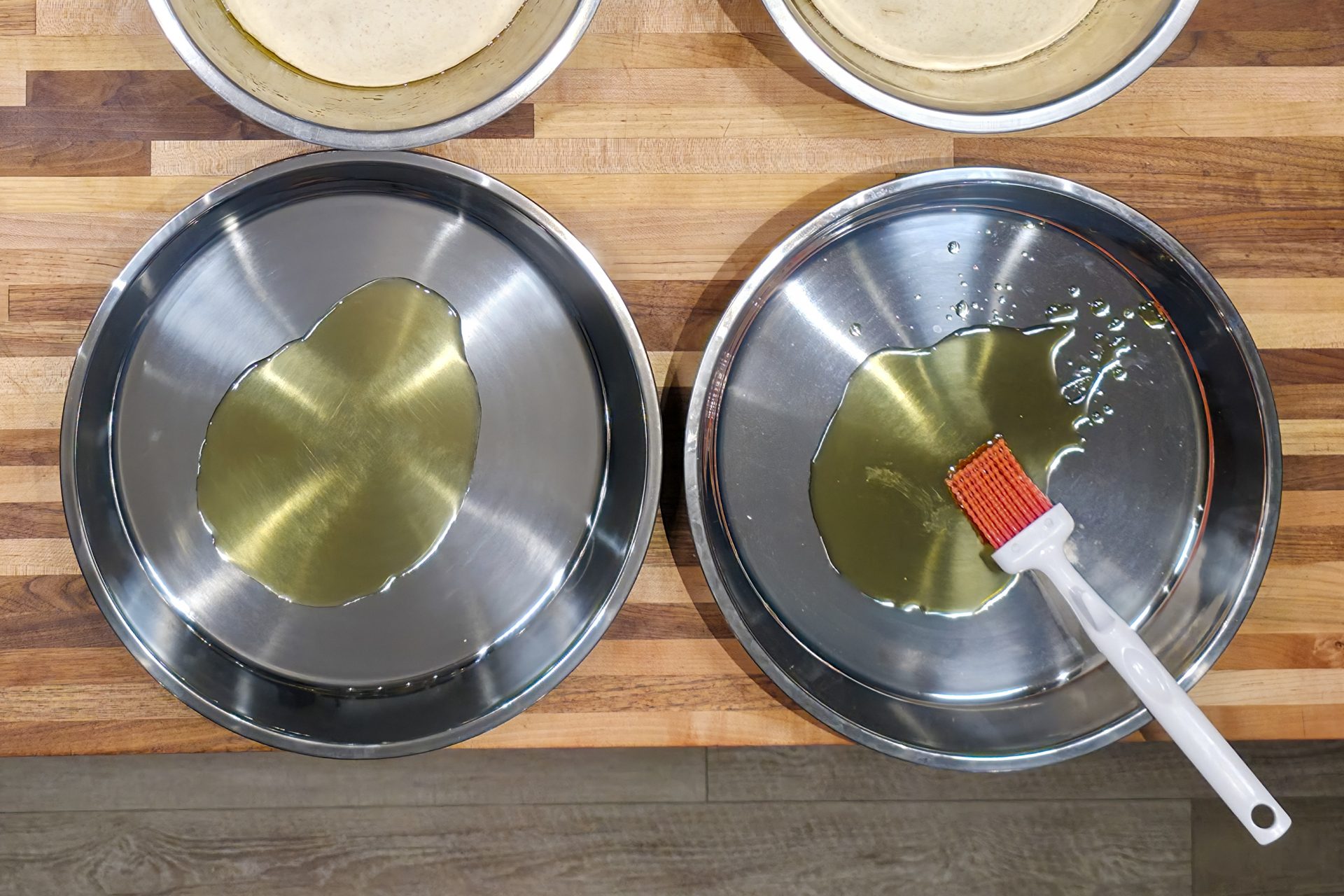
Meanwhile Pour 2 TBSP of extra virgin olive oil into each of the pizza pans.

60 min. pan pizza = steps-27

3.3.

Then, spread it evenly using a silicone brush (If there is an excessive amount of oil, do not remove, as it will support the baking process of the pizza).

3.4.

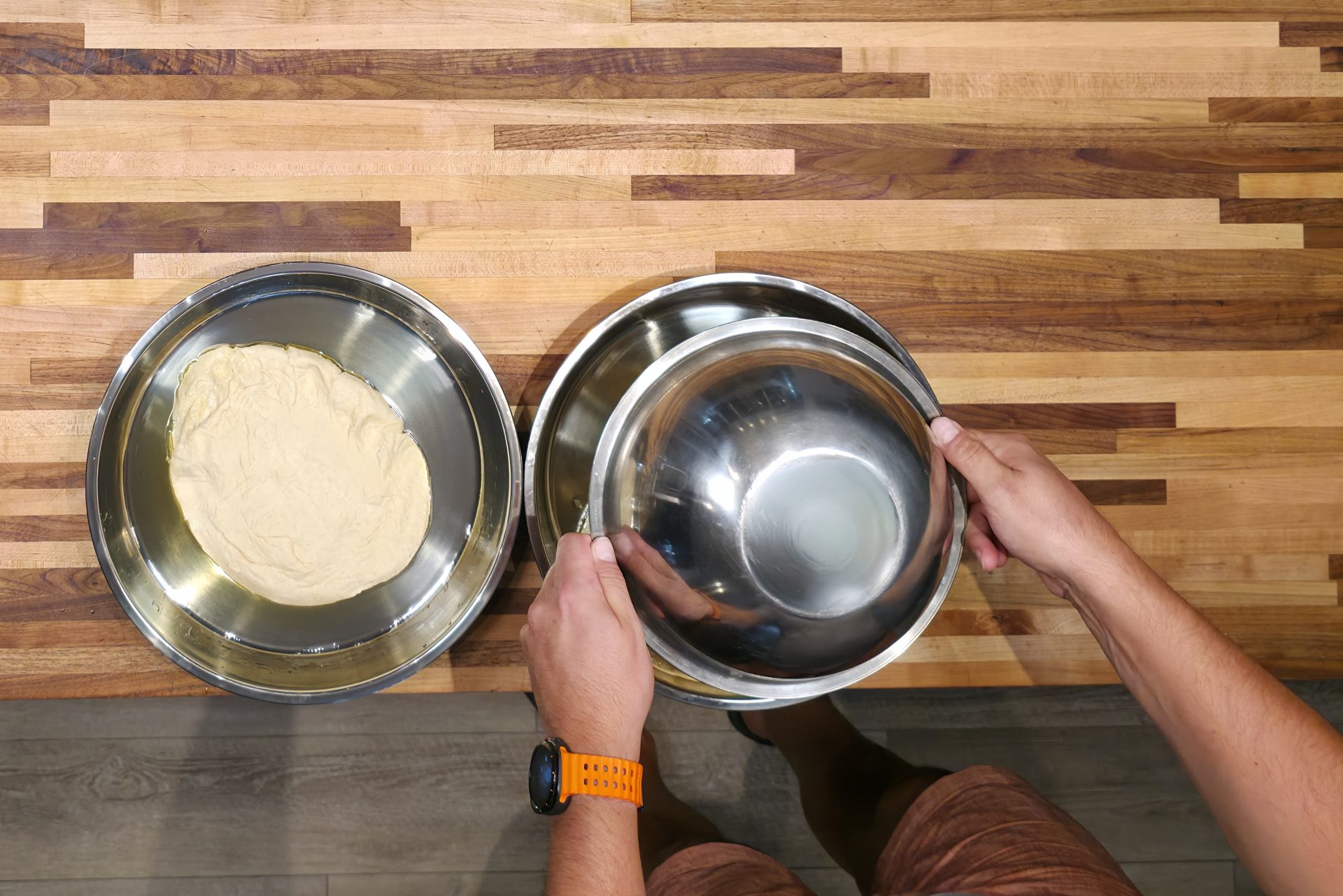
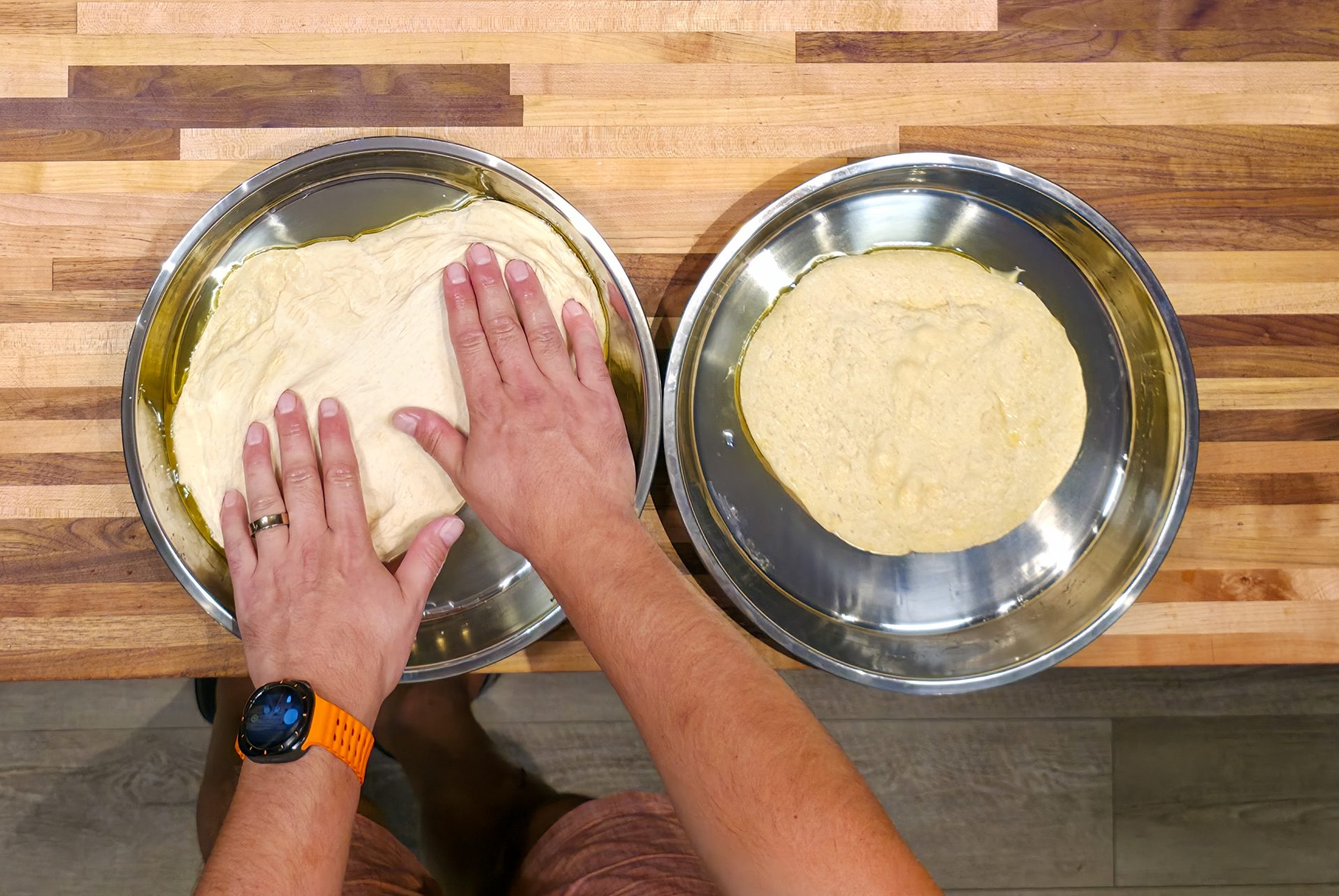
Place one piece of dough into each pan by letting gravity do its job.

60 min. pan pizza = steps-29

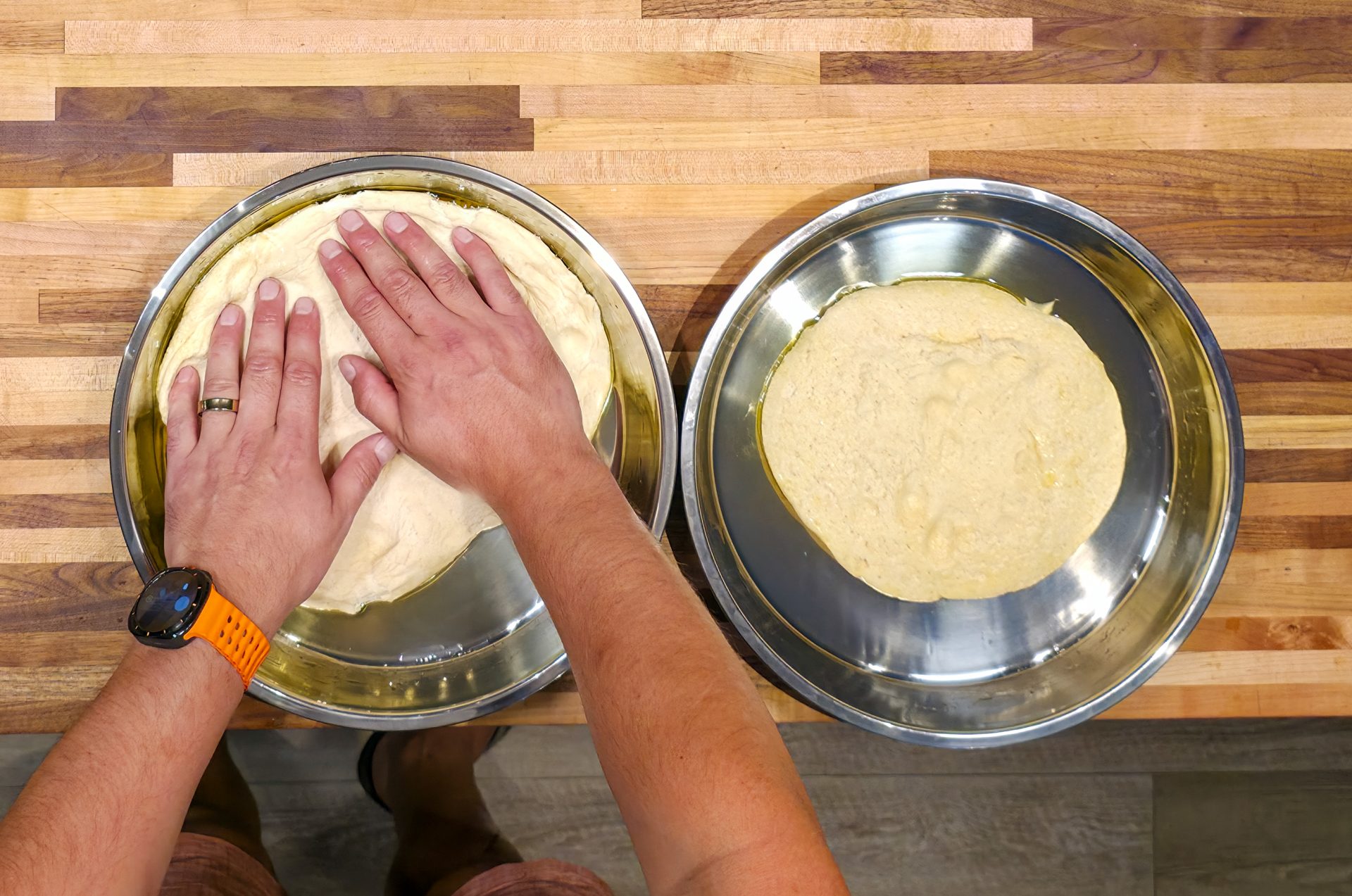
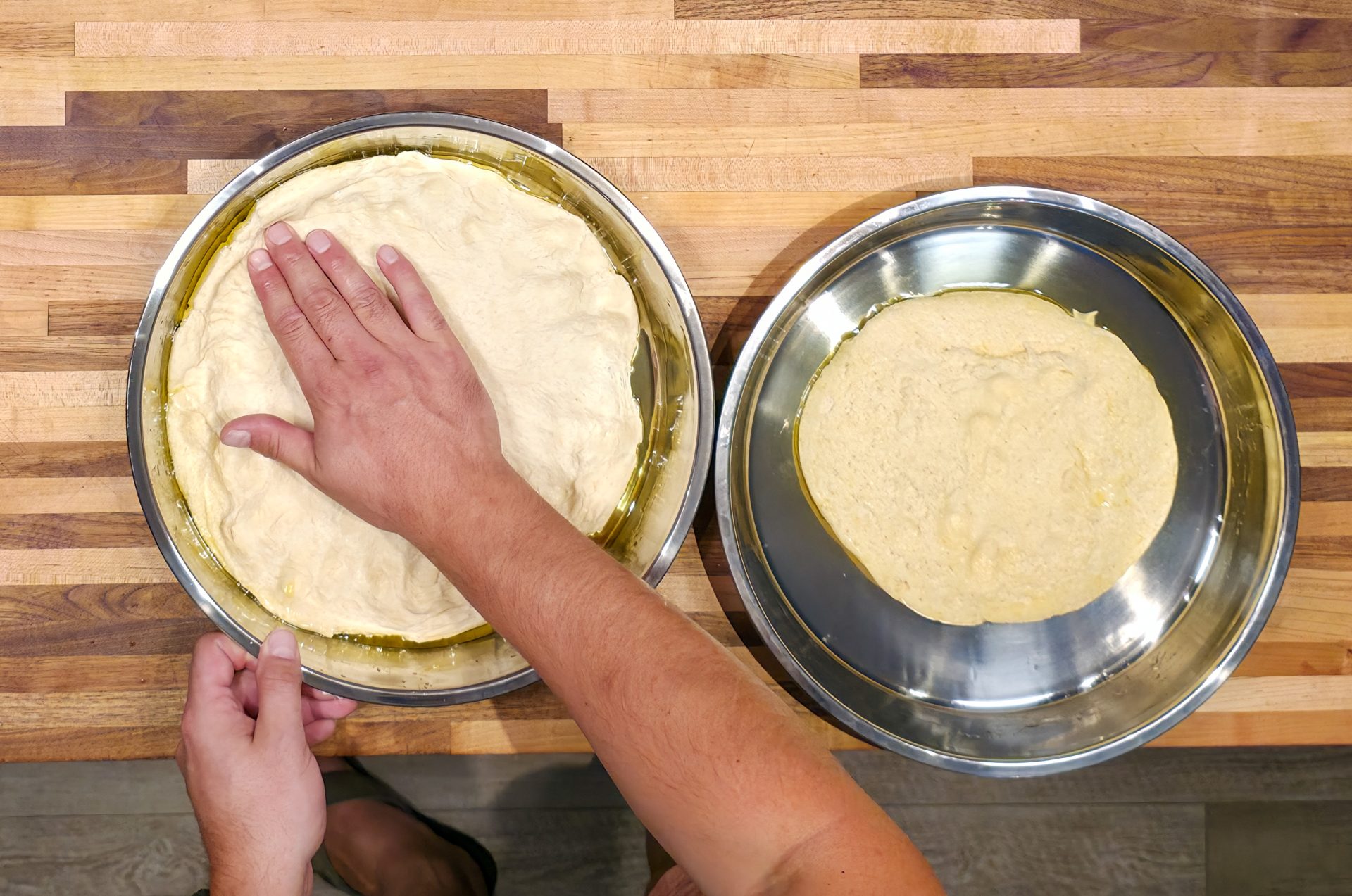
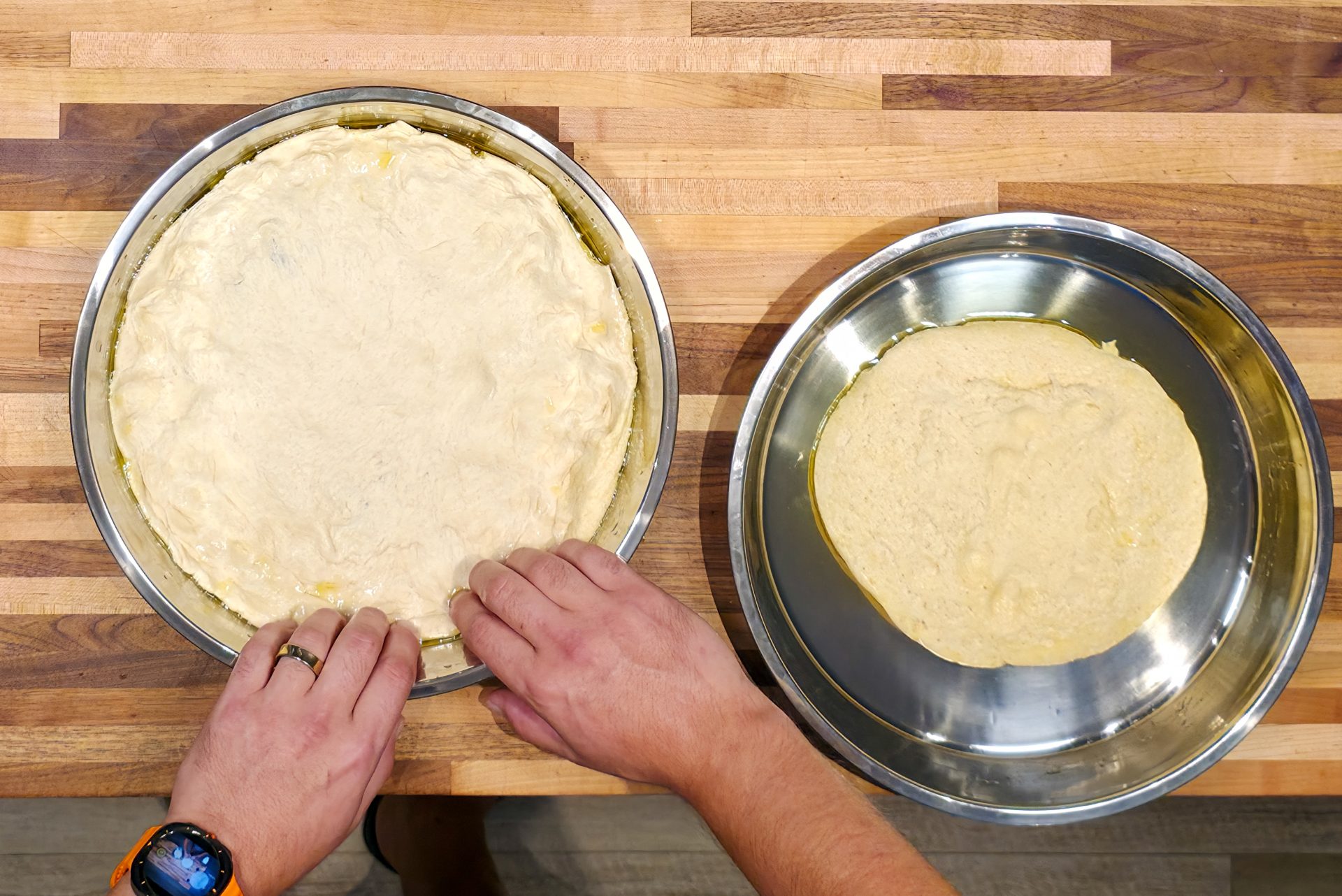
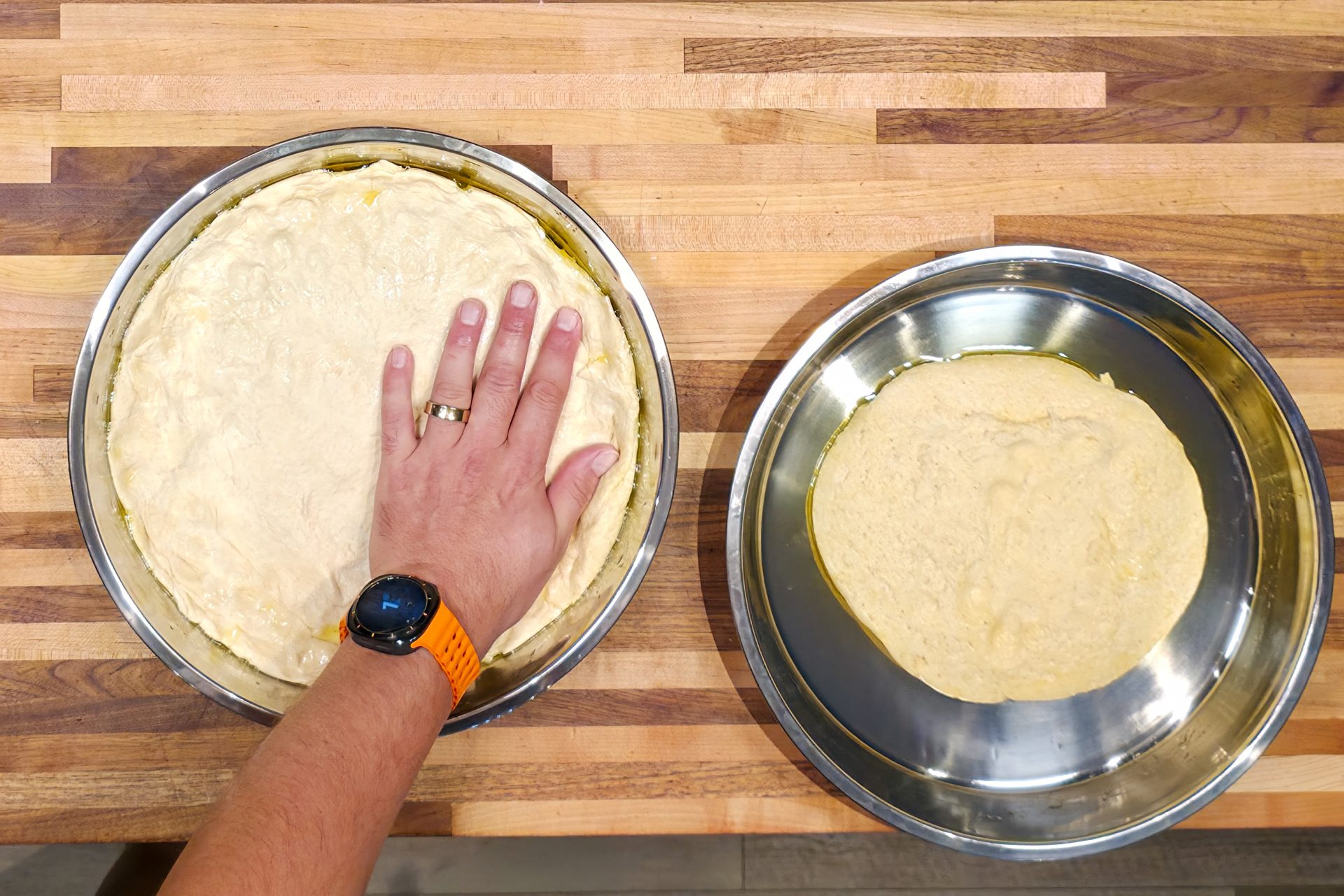
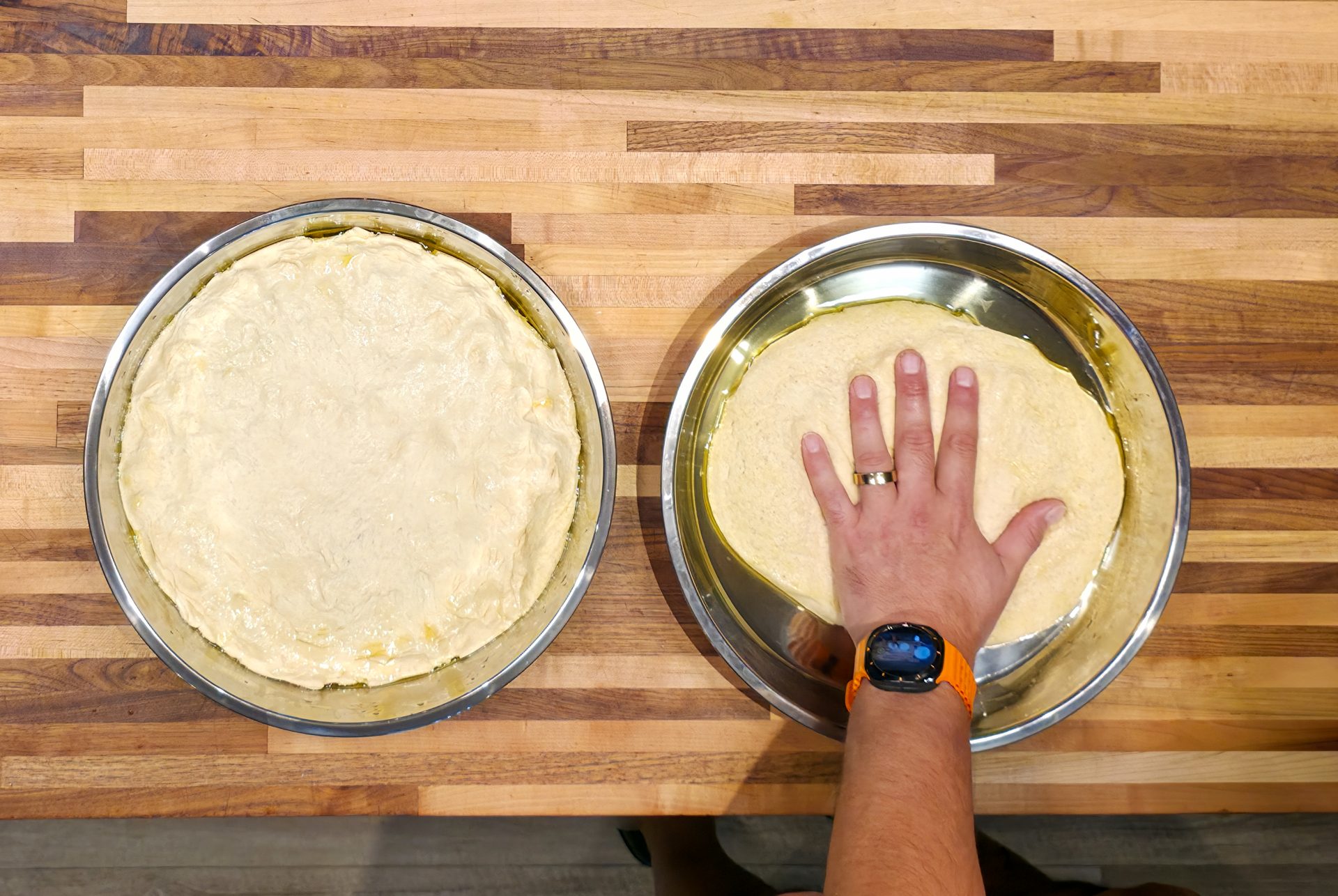
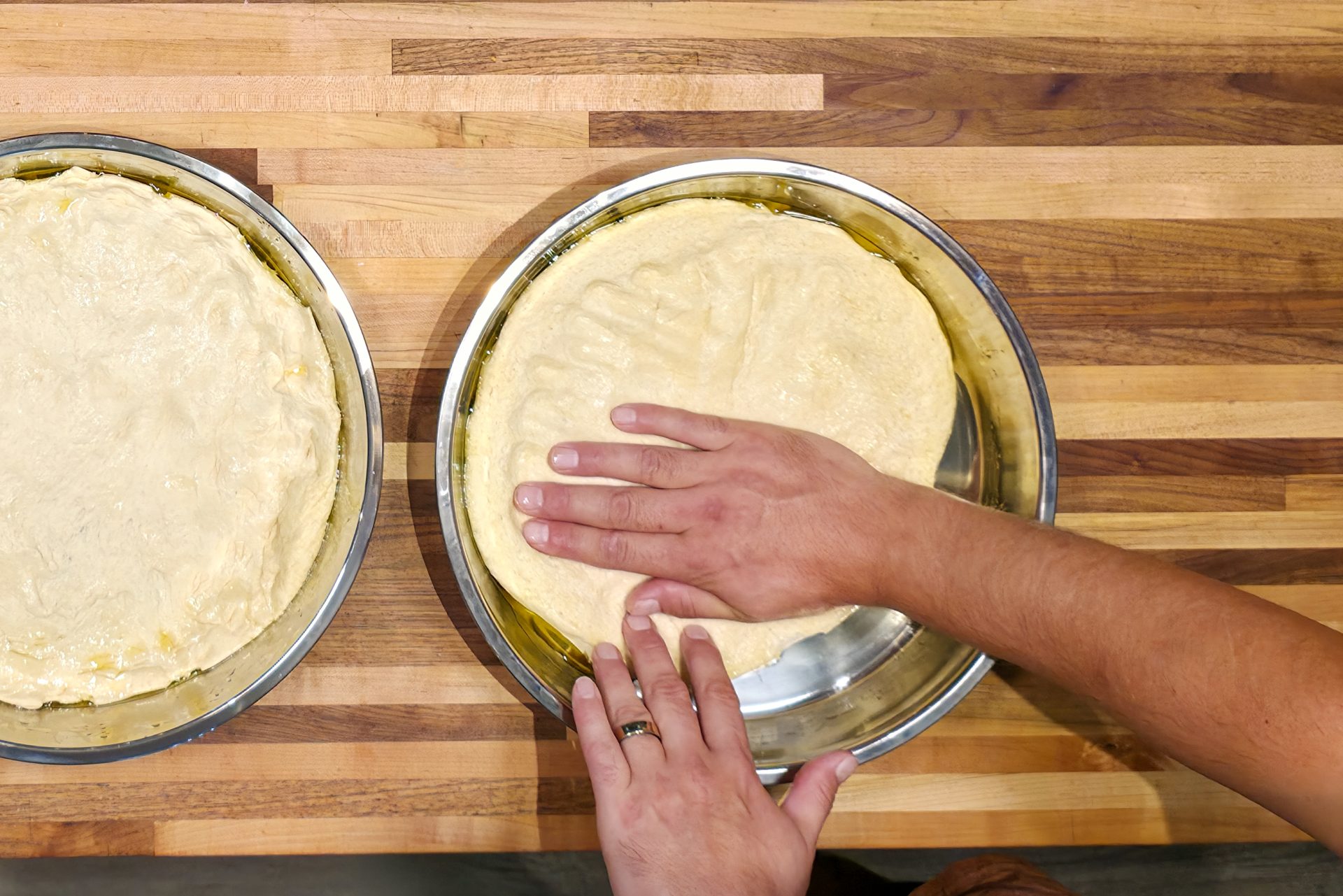
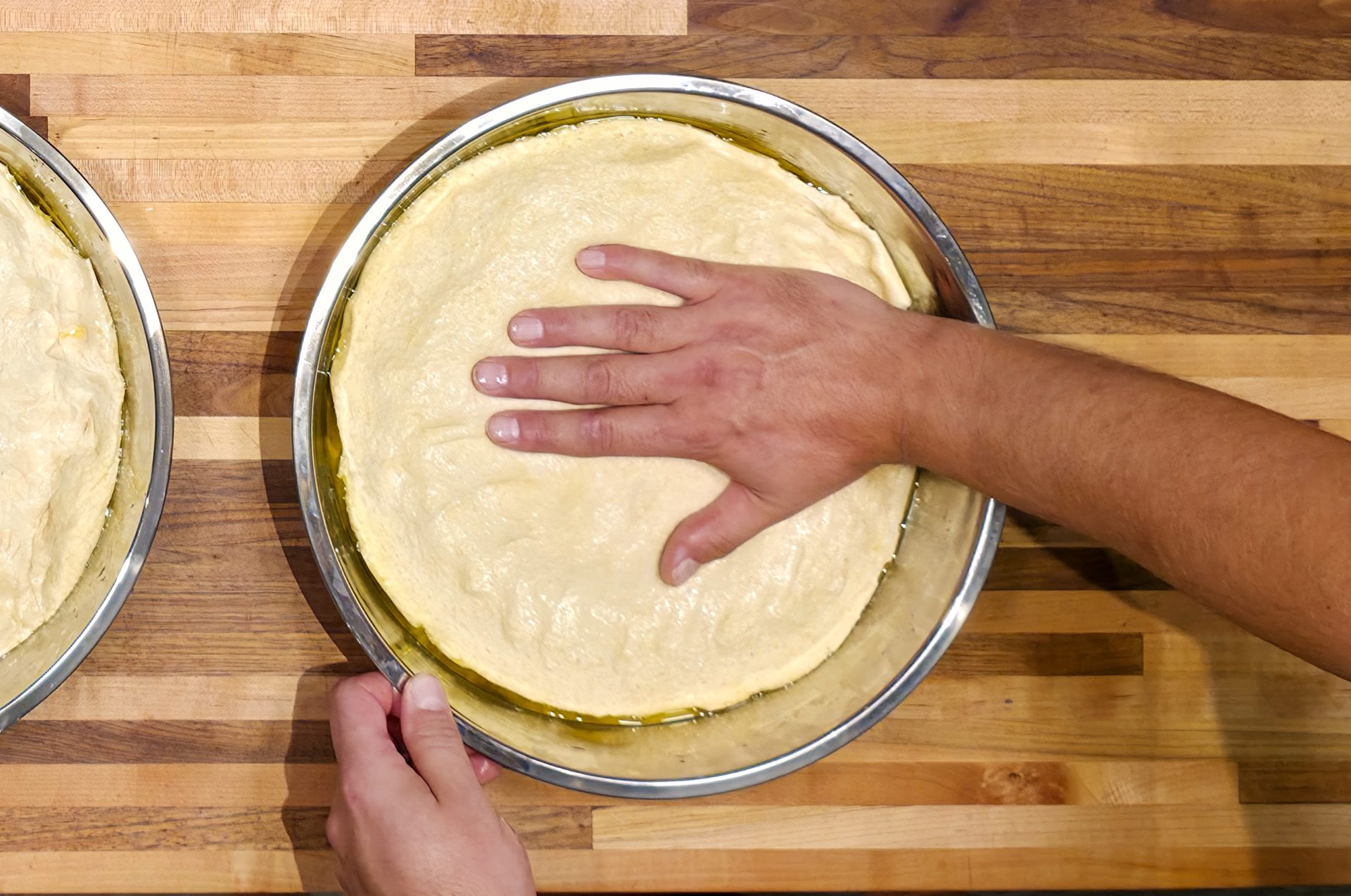
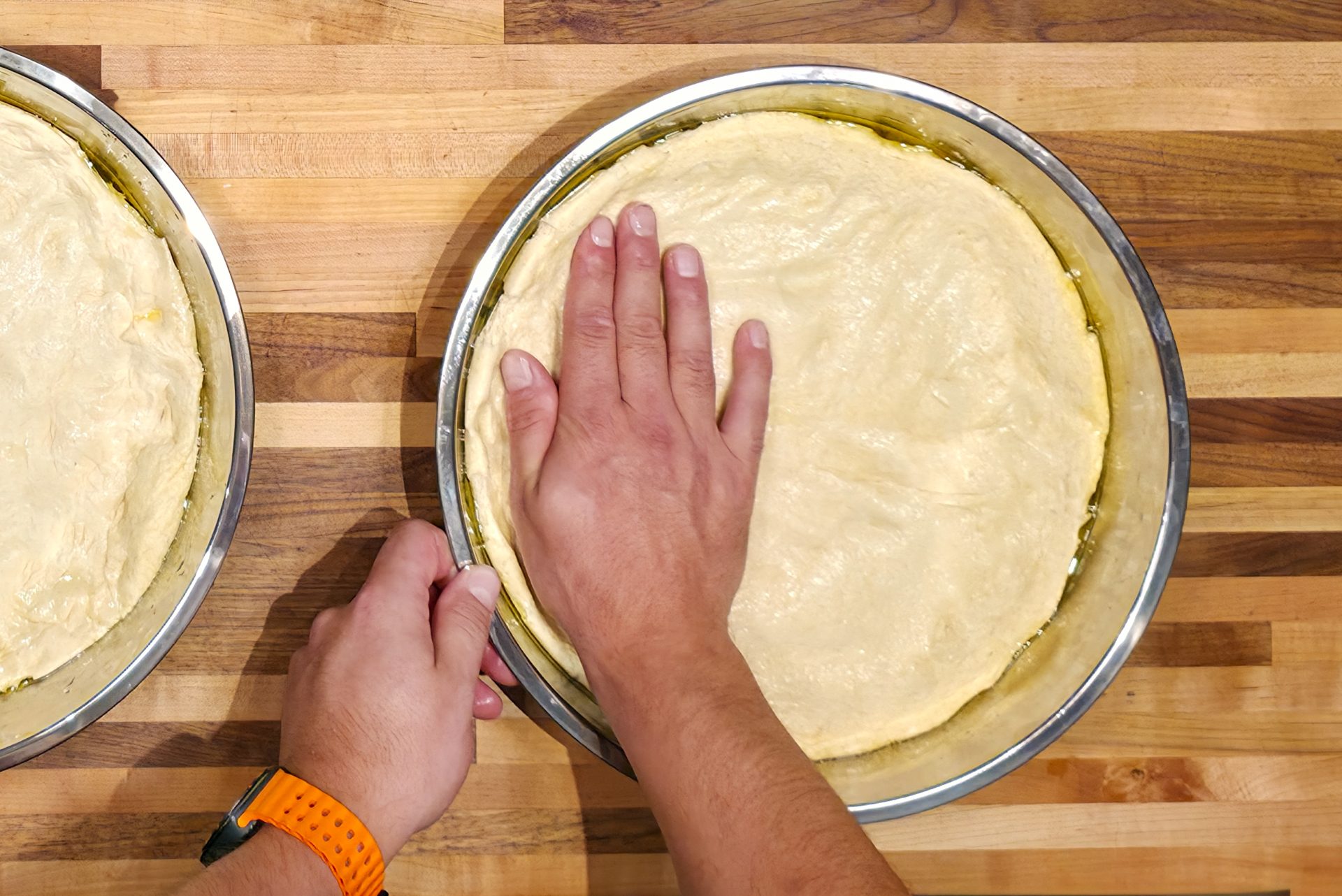
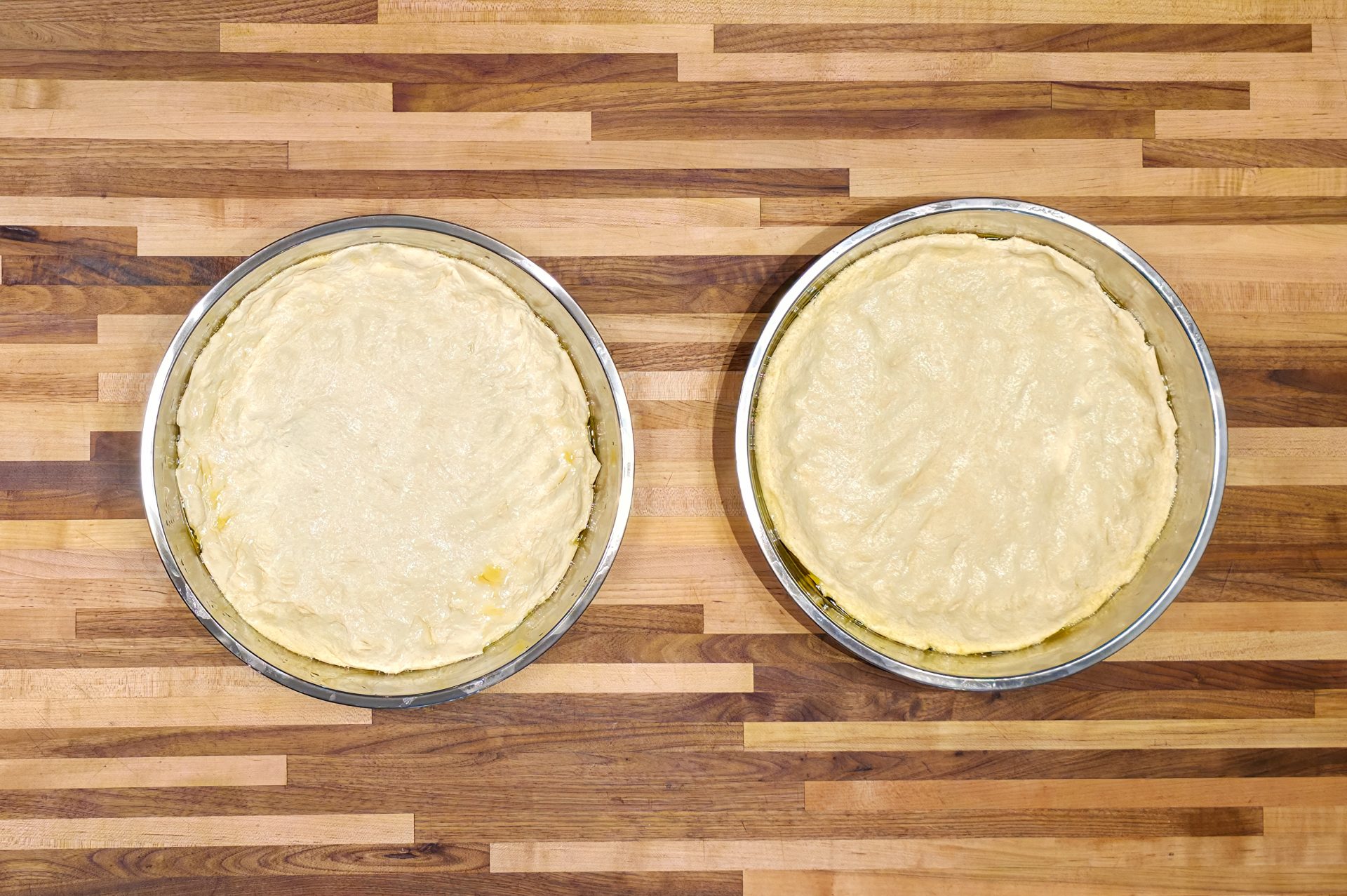
3.5. Then, using all your fingers, evenly distribute the dough by gently pressing and stretching it until you have covered the entire bottom diameter of the pan.

Note: Because the dough has a greasy surface after being flipped into the pan, it is easy to use bare hands without it sticking.

60 min. pan pizza = steps-3060 min. pan pizza = steps-3160 min. pan pizza = steps-3260 min. pan pizza = steps-3360 min. pan pizza = steps-3460 min. pan pizza = steps-3560 min. pan pizza = steps-3660 min. pan pizza = steps-3760 min. pan pizza = steps-3860 min. pan pizza = steps-39

3.6.

Set the pizzas aside while you prepare the sauce (no need to cover them).

4. Pizza Sauce:

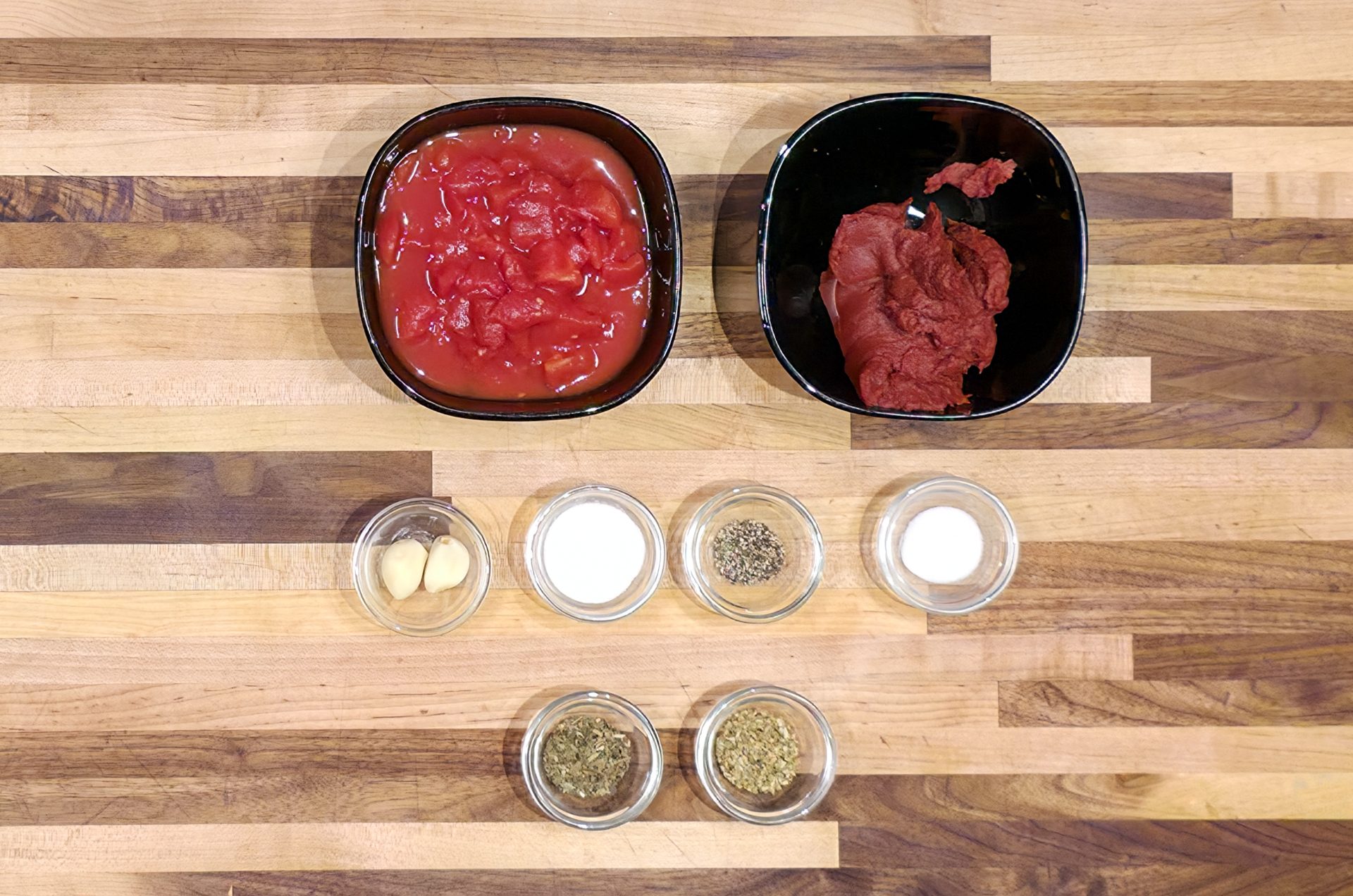
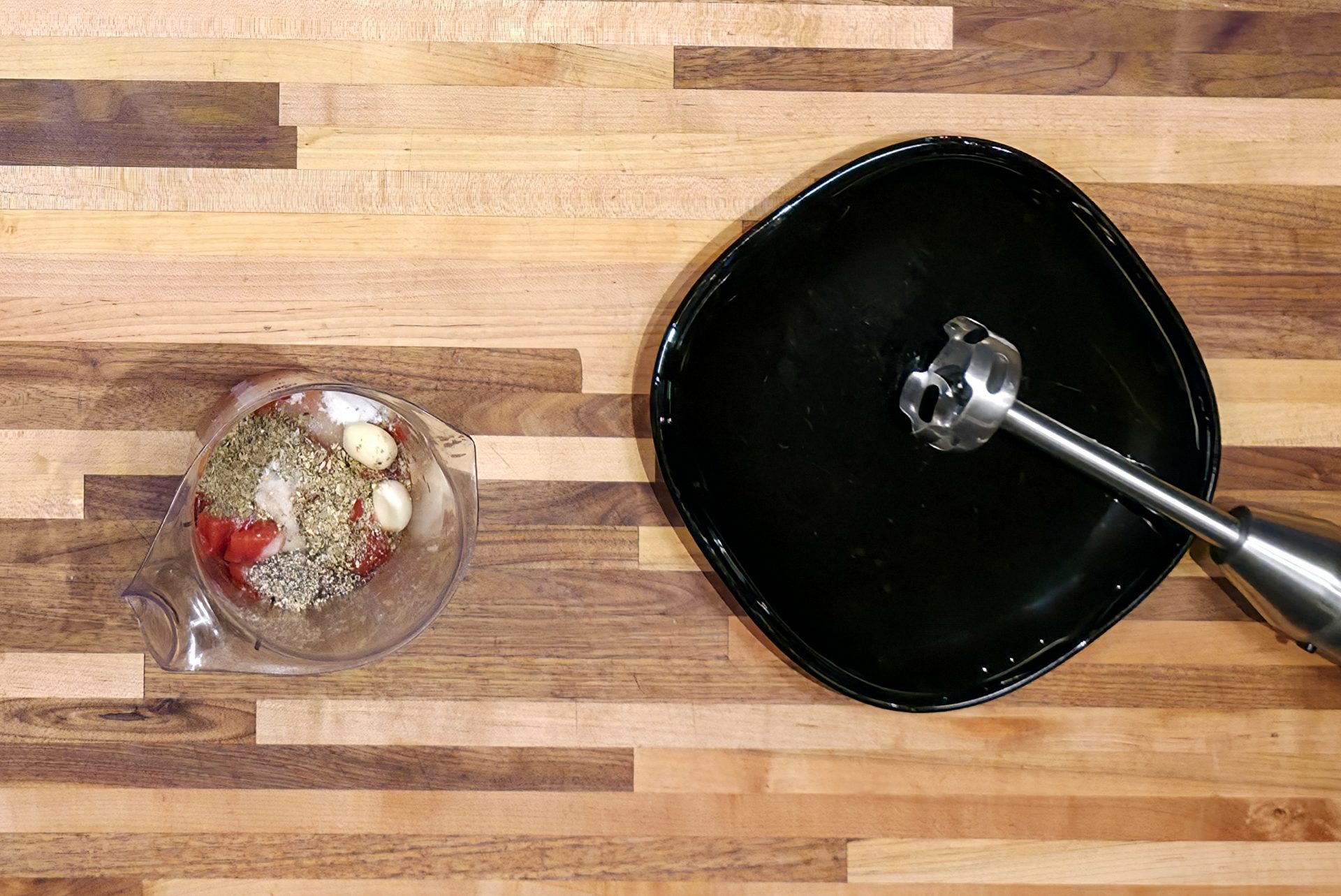
4.1. Place in the measuring pitcher or into the medium mixing bowl:

1 can of diced tomatoes
1 can of tomato paste
2 cloves of garlic – peeled
1 TBSP of granulated sugar
1 TSP of oregano
1 TSP of basil
½ TSP of salt
¼ TSP of pepper

60 min. pan pizza = steps-1760 min. pan pizza = steps-18

4.2.

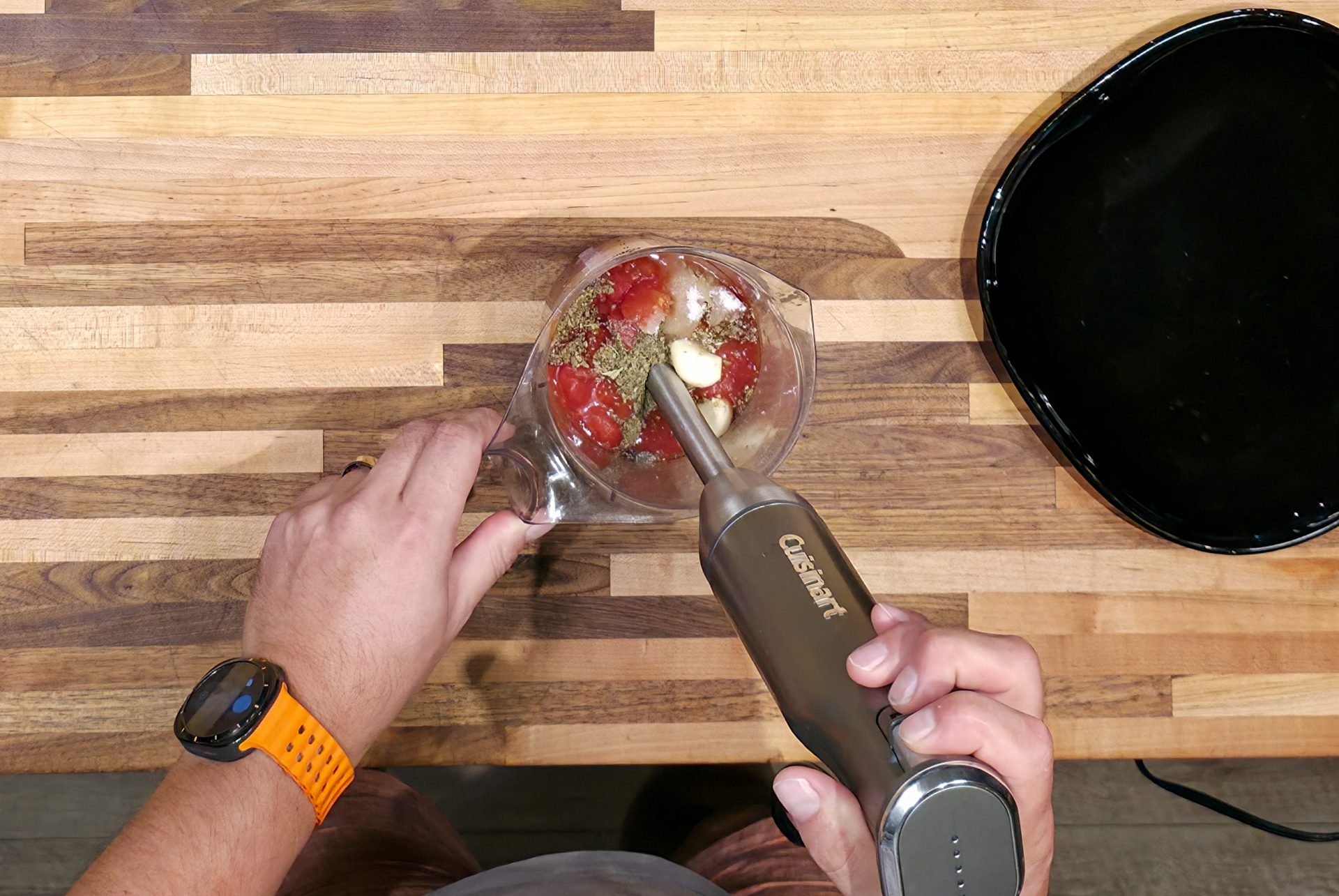
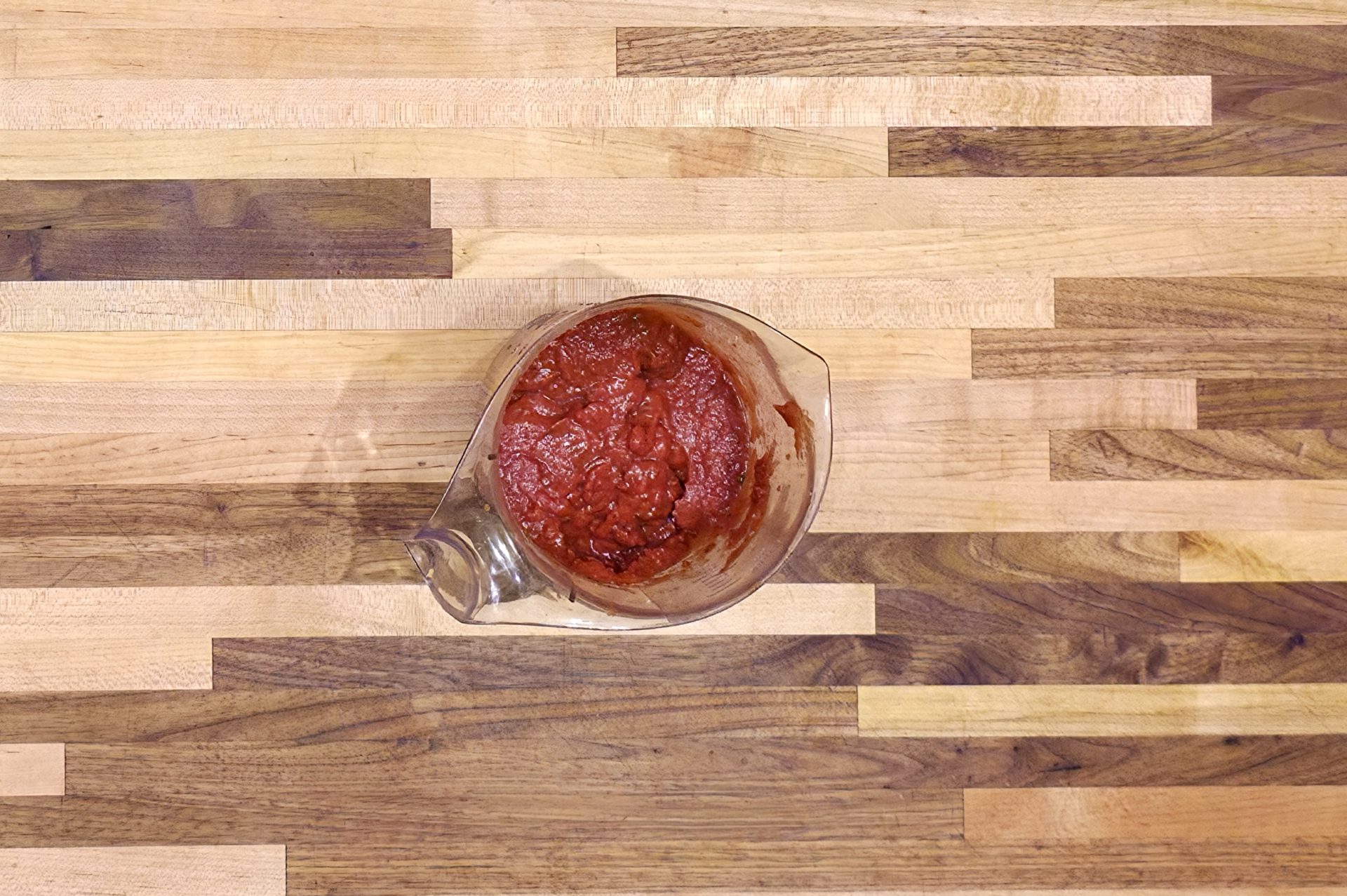
Process with an immersion blender until all ingredients are nicely combined and a thick pizza sauce is formed.

60 min. pan pizza = steps-1960 min. pan pizza = steps-21

5. Assemble and Proof:

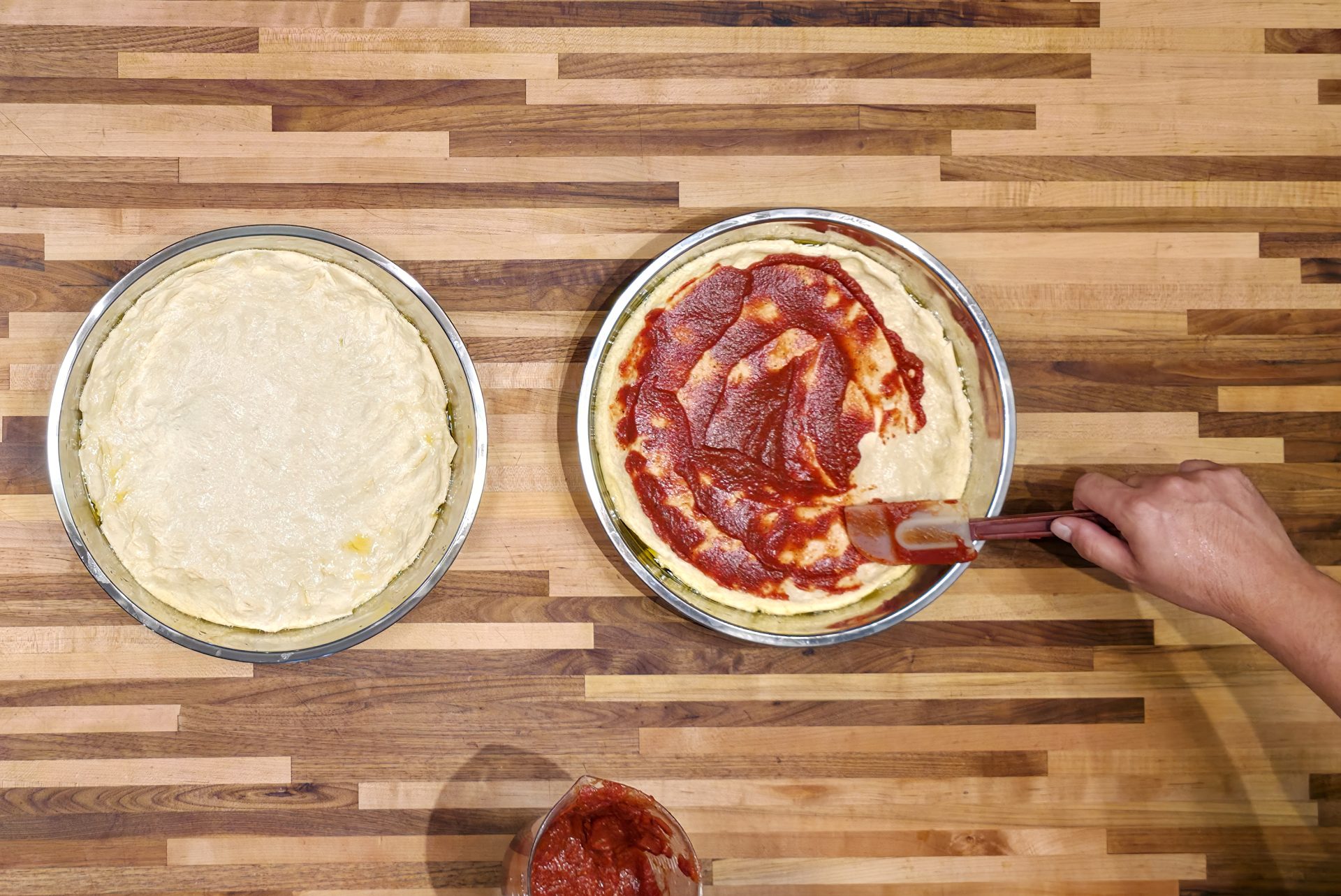
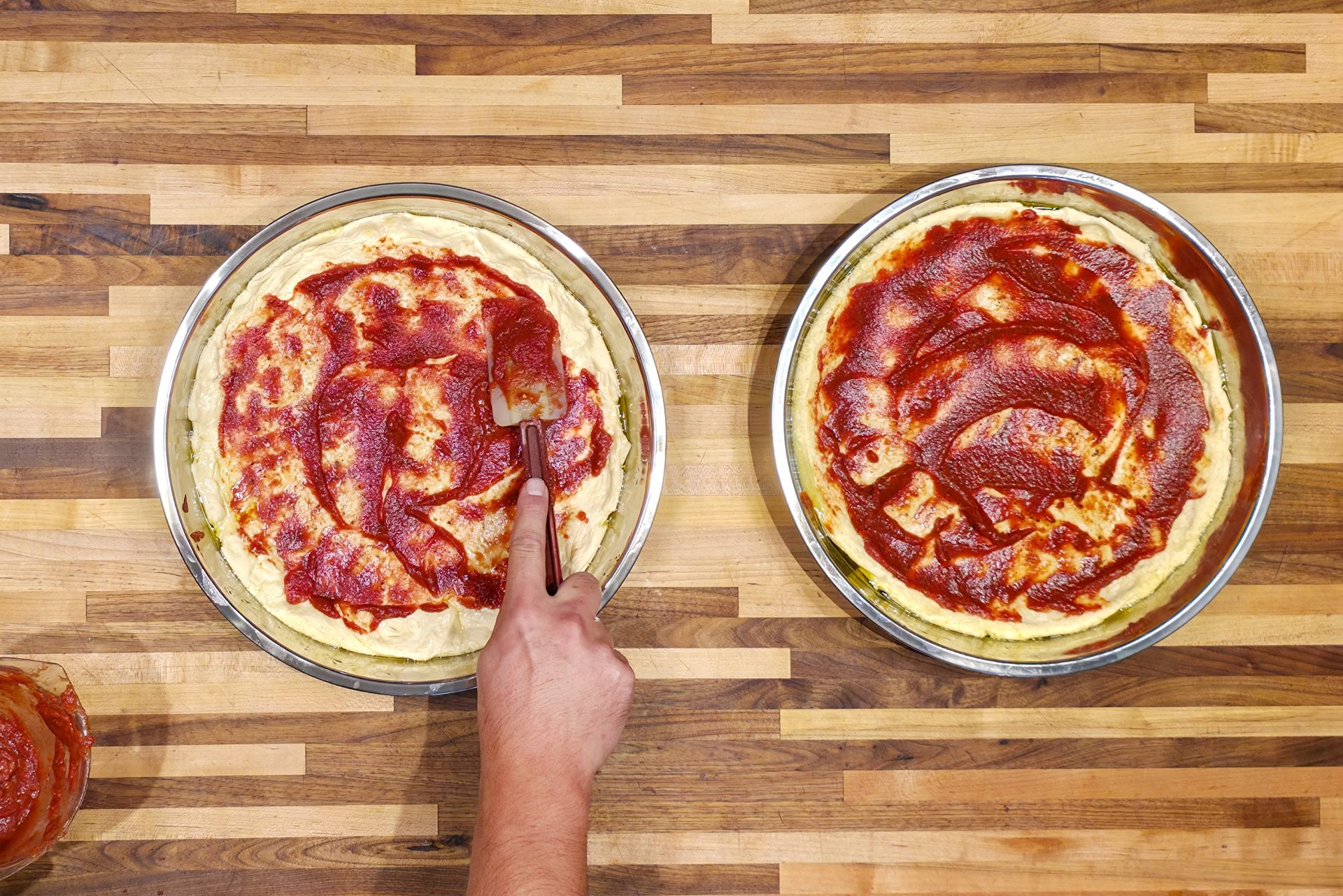
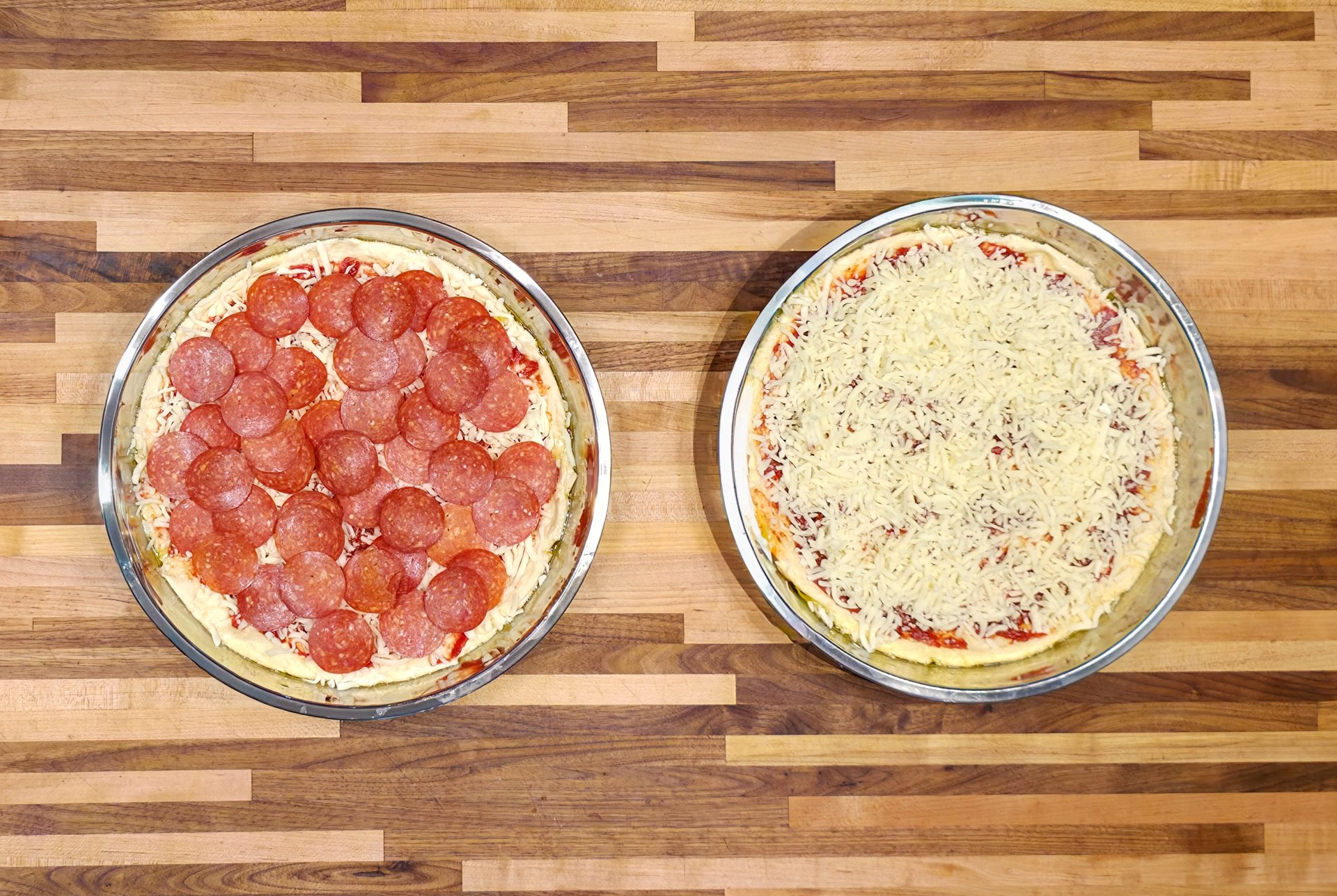
5.1. Spread the pizza sauce evenly on both pizzas.

Important:

  • Distribute it to the edges (you can go all the way to the edge for a crustless pizza) or leave a 1/2-inch to 1-inch border to create a crust.
  • Use an amount of the sauce you like, up to half of the total amount for each saucy pizza, or a quarter of the amount for pizza with sauce in moderate quantity (as I do), based on your preference.
  • If you do not use all the sauce, feel free to store it in the refrigerator for up to one week or in the freezer for up to half a year for your next pizza project.
  • The amount of sauce in the recipe is designed to use the entire can of diced tomatoes as well as the entire can of tomato paste to prevent you from having leftover cans and to prevent the necessity of measuring.
60 min. pan pizza = steps-4060 min. pan pizza = steps-41

5.2.

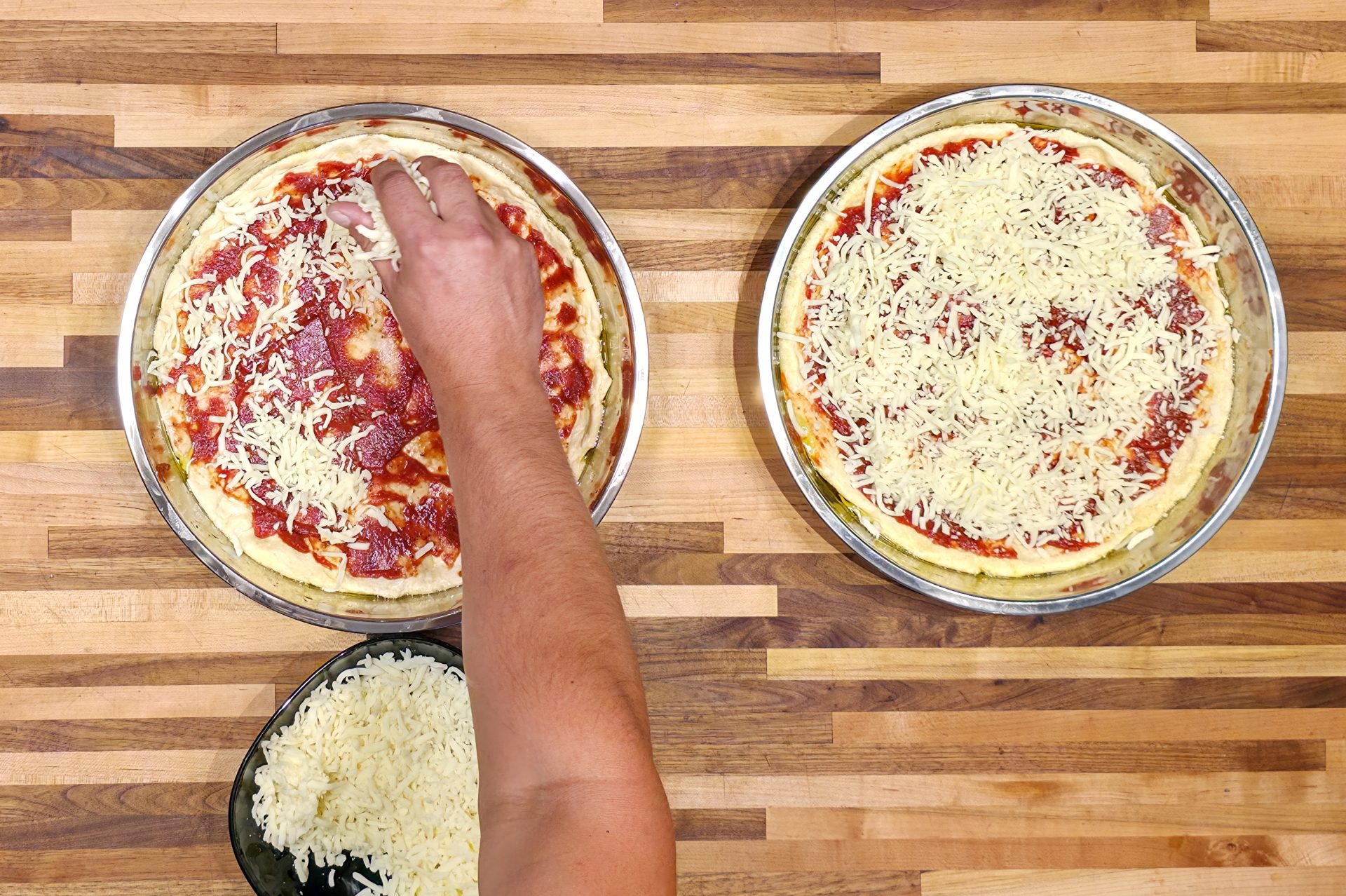
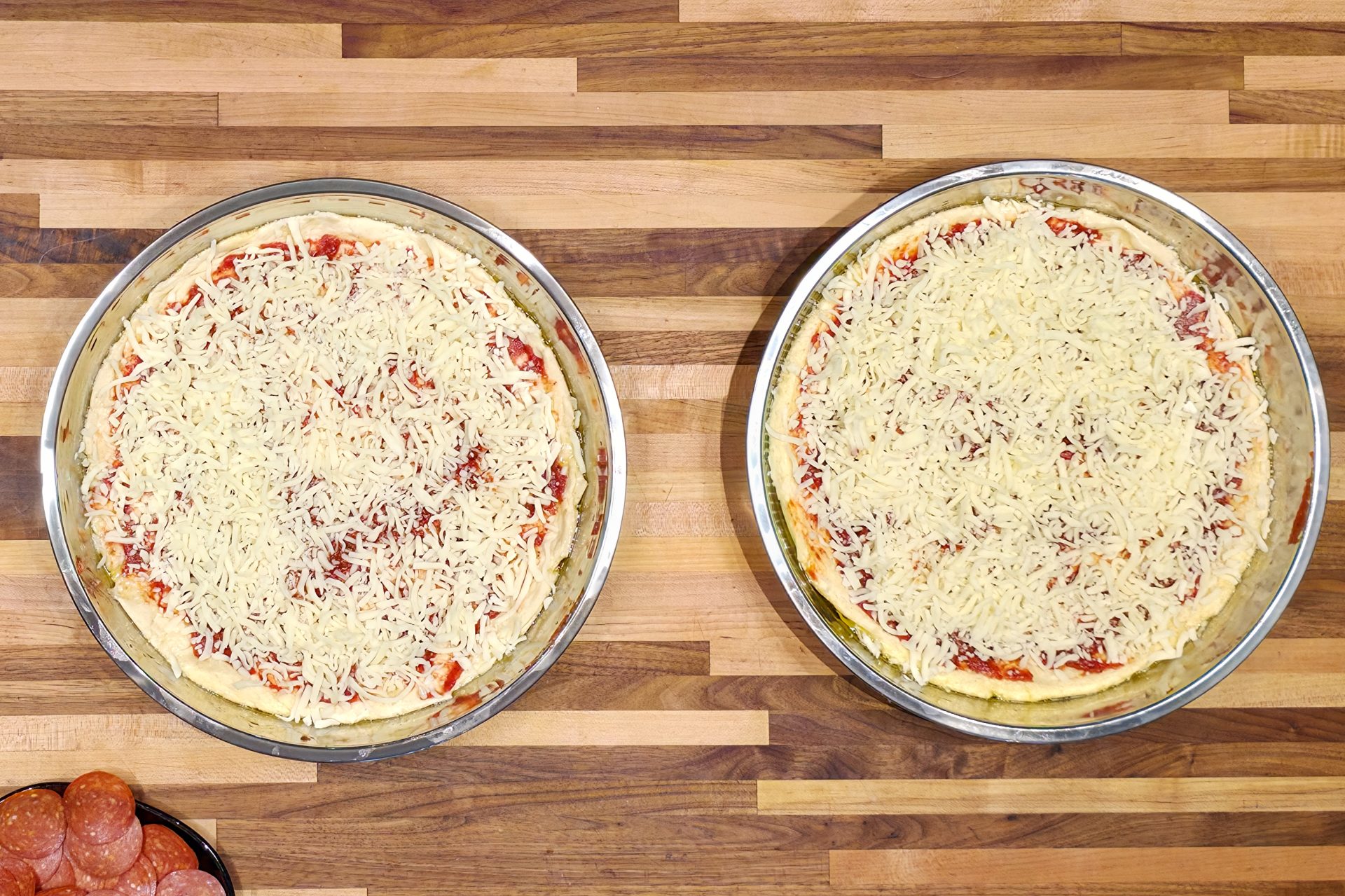
Next, top each pizza with ½ LB of shredded mozzarella.

60 min. pan pizza = steps-4360 min. pan pizza = steps-44

5.3.

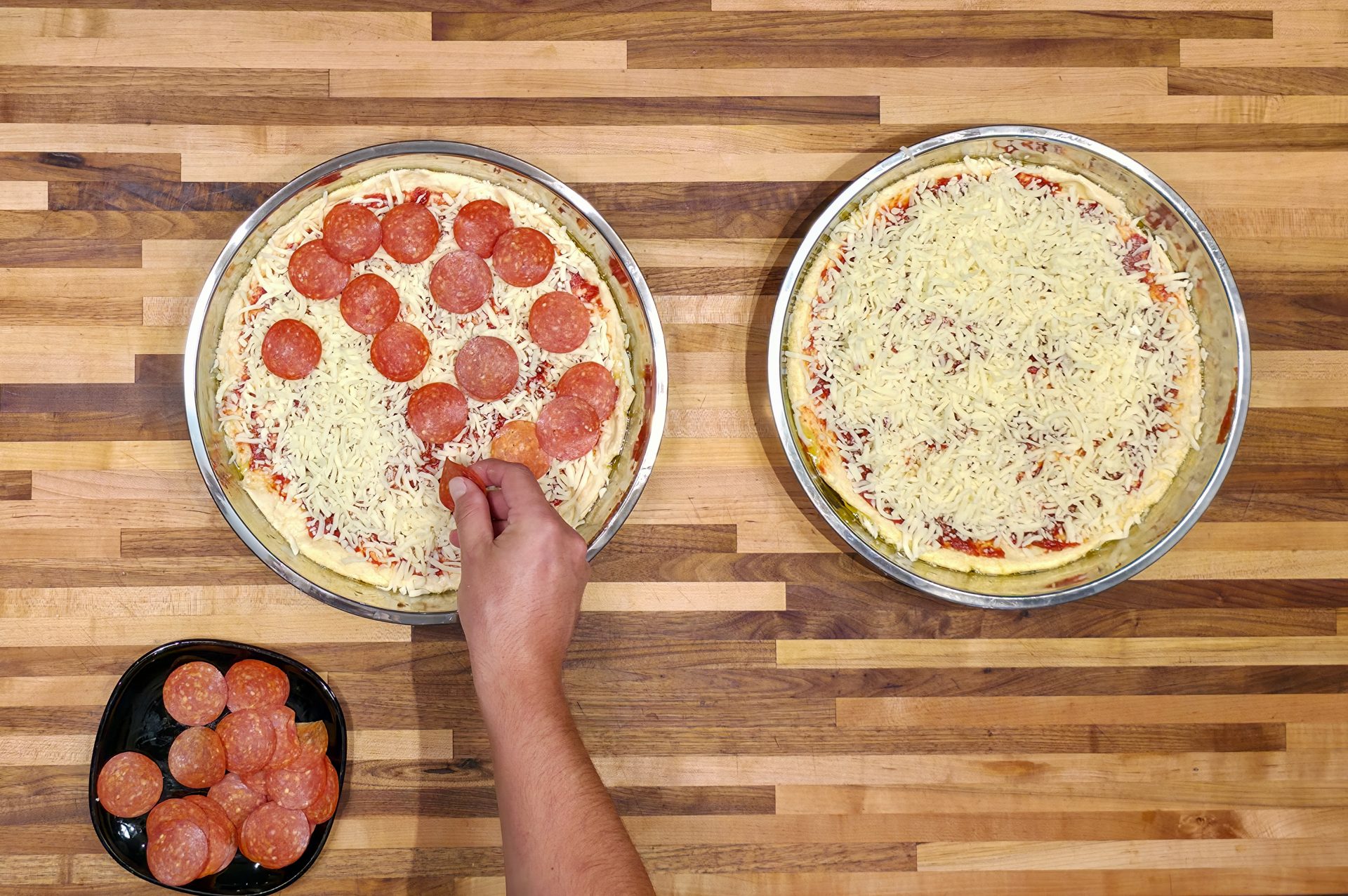
Evenly distribute the pepperoni on top.

60 min. pan pizza = steps-4560 min. pan pizza = steps-46

5.4. Set the pizza aside until the oven is preheated or place it right away into the preheated oven.

Note: For this pizza, proofing is not necessary.

6. Bake, and Serve 60 min. Pan Pizza:

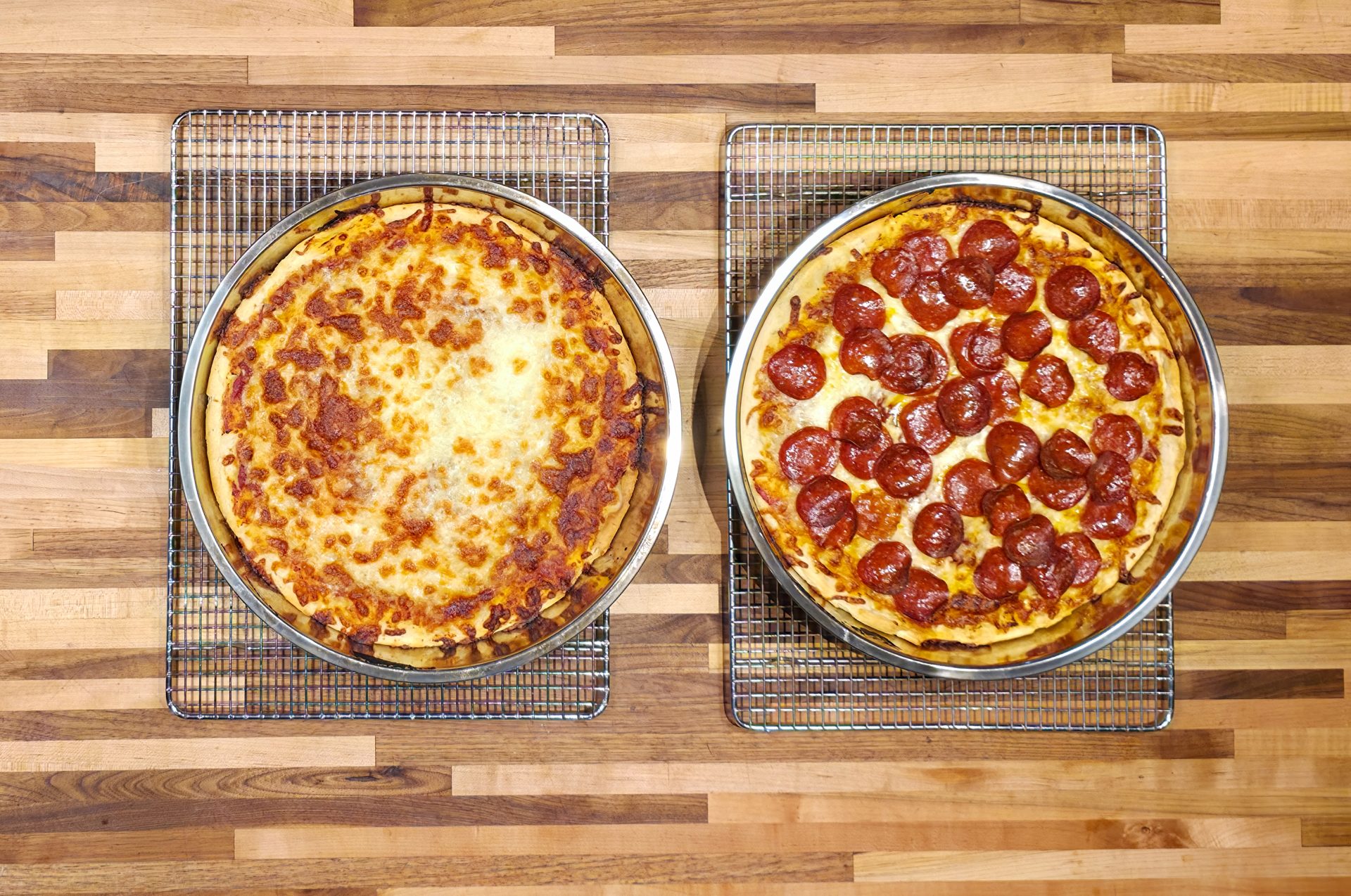
6.1. Place the pizzas on the bottom rack of the preheated oven and bake until done, about 20 minutes.

Note: If your pizzas do not fit next to each other, you can place one on the middle rack and one on the bottom rack.

6.2.

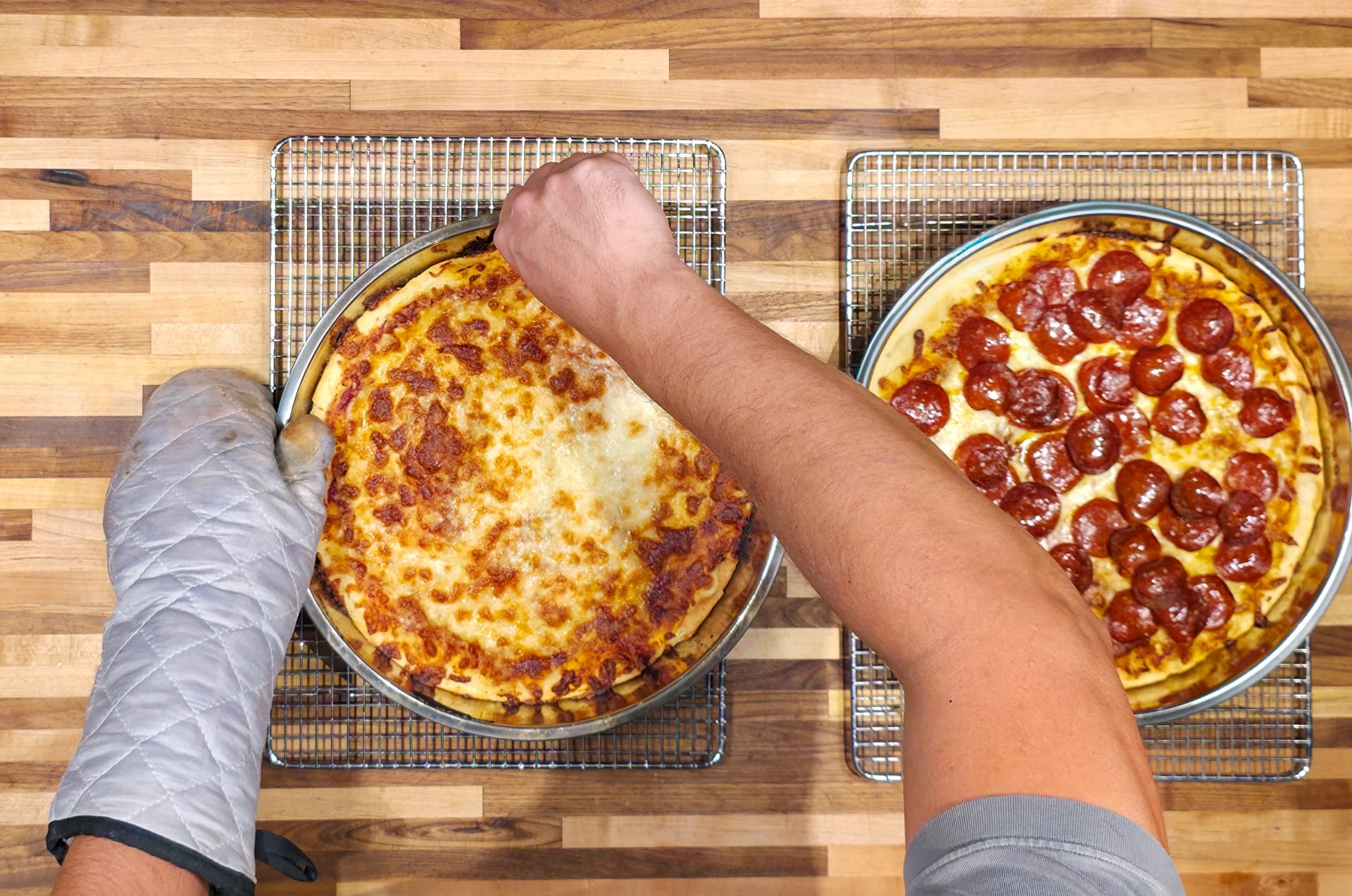
Remove them from the oven, place them on a cooling rack, and let them sit for 3 to 5 minutes to make them easier to handle.

60 min. pan pizza = steps-47

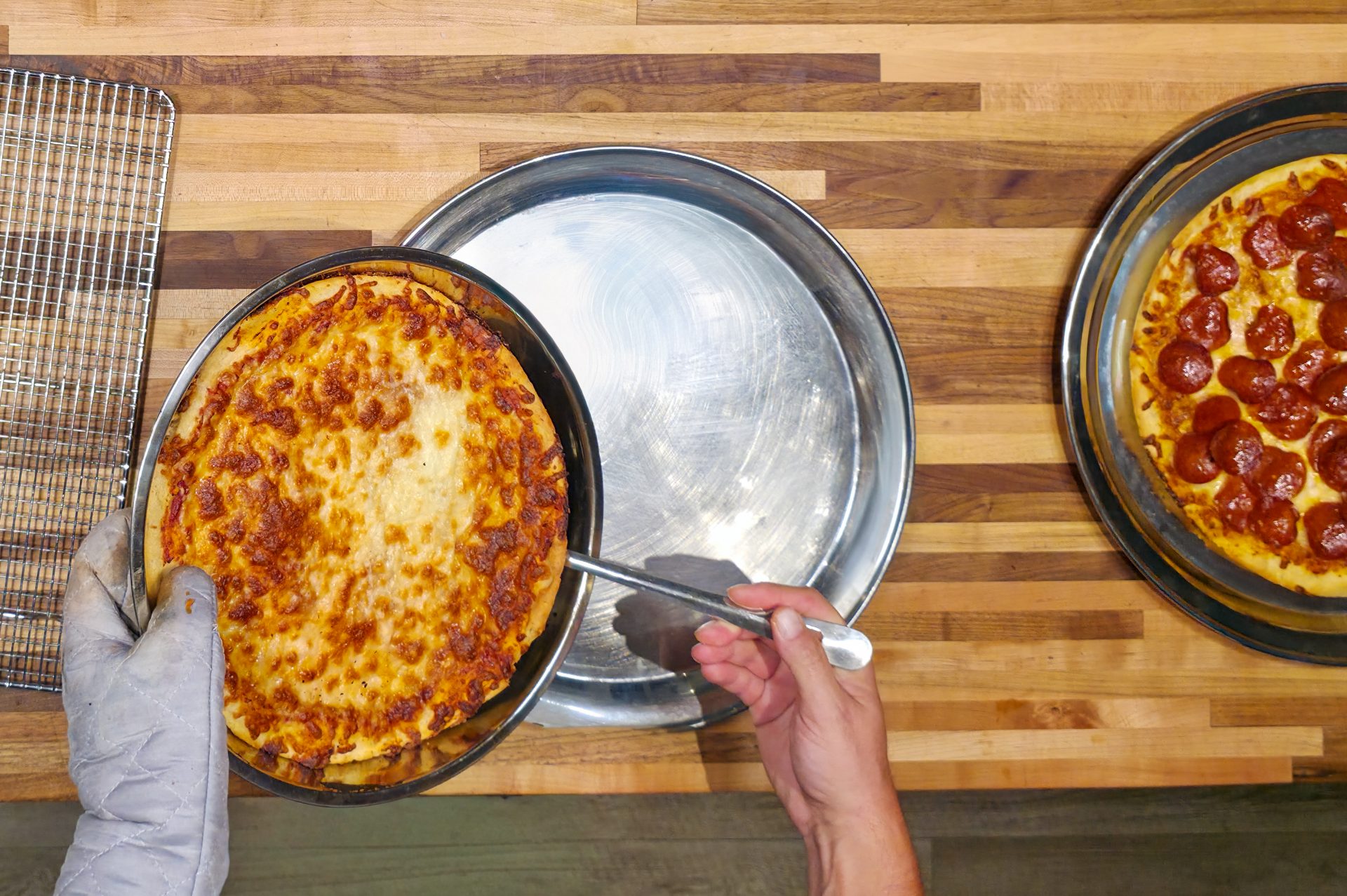
6.3. Then remove the pizzas from the pans, cut each pizza into 4 to 8 portions while it is still in the pan, or carefully remove it to a cutting board or tray before cutting.

Tip: Run the paring knife around the entire diameter of both pizzas to make sure that the sides are released (even if well-greased, sometimes sauce or cheese can get over the edge of the pizza, causing the edges to stick to the pan). Then, use the turner to carefully move the pizzas onto the serving plate or tray. Make sure to exercise caution by wearing oven mitts and not touching the hot pan in order to prevent burn injuries.

60 min. pan pizza = steps-4860 min. pan pizza = steps-4960 min. pan pizza = steps-5060 min. pan pizza = steps-51

6.4.

Serve warm.

Types of Flour

March 26, 2024

Welcome to the fascinating and often underestimated world of types of flour. For millennia, flour, in its myriad forms, has been a fundamental building block of human nourishment and culinary artistry. From the simplest rustic breads to the most delicate pastries, the choice of flour is a pivotal decision that profoundly shapes the outcome. This article will embark on a journey to explore the broad spectrum of types of flour, moving beyond the familiar to appreciate the subtle yet significant differences that make each category unique. Understanding the various types of flour is not just for professional bakers; it’s a key piece of knowledge for any home cook looking to elevate their culinary creations and truly grasp the science and art behind their favorite dishes. We will delve into what makes these types of flour distinct and how their inherent properties influence texture, structure, and flavor.

Tom the Chef Tom the Chef Founder
About the Author:
Tom the ChefFounder
# 1
  • Published Recipes: 276
  • Av. Recipe Evaluation:
  • Location: Iowa, USA
  • Member since: 2023-02-02

Comments

Disclaimer

  1. General Information Content on this page above, including the content provided on www.CookingHub.com, including all recipes, articles, and other materials, is for general informational purposes only. This content reflects the personal opinions and experiences of its authors and is not intended to provide professional dietary, medical, legal, or political advice. Please consult a qualified professional before making any decisions based on the information presented here.
  2. Content Ownership and Use Content on this page above, including content published on CookingHub.com is owned by the individual authors who created it. Only the authors can access, modify, or delete their content from the platform. Our content may be embedded on third-party websites and blogs without modification. No reimbursement will be provided for this use. If an author removes content from CookingHub.com, it will no longer be available through any embedded links.
  3. Limitation of Liability Neither www.CookingHub.com (operated by the CookingHub Foundation) nor content authors are responsible for any outcome or consequence resulting from the use of information on this site. This includes, but is not limited to:
    • Food Safety: Any health risk related to food handling, food quality, or failure to follow USDA recommendations (including minimum safe cooking temperatures).
    • Preparation Safety: The proper and safe handling of cooking equipment or its suitability for any given task.
    • Recipe Outcomes: The final look, taste, or success of following a recipe.
    • Ingredients and Equipment: The sourcing of ingredients, tools, equipment, or anything else related to the preparation and consumption of food.
    • Nutritional and Dietary Information: The accuracy of nutritional data. This information is provided as a courtesy and should not replace advice from a medical provider. You are responsible for verifying that a diet is suitable for your personal health needs.
    • Errors and Omissions: Any potential errors, typos, or unclear directions in articles and recipes.
  4. User Responsibility All readers, visitors, and users of embedded content are solely responsible for evaluating recipes and articles. You must make your own decisions about whether to follow the steps and recommendations provided. It is your responsibility to ensure that ingredients and preparation methods are safe and appropriate for your personal dietary restrictions and health conditions.